A well-planned business gift set budget is not a simple total of product prices. It also includes logo application, box structure, inserts, approval work, packing, freight, and delivery coordination. Because these layers affect one another, a minor product change can alter the packaging size, carton density, and final delivery plan.
A reliable quotation starts with the complete project scope. The goal is not to select the largest number of items. Instead, the goal is to protect the main purpose, create a coherent presentation, and keep every cost driver visible before approval.
Define the total project scope before selecting products
A useful budget starts with the recipient group, quantity, occasion, destination, budget ceiling, and required arrival date. Without those inputs, a product shortlist may look attractive while leaving major project work outside the estimate.
The recipient group sets the required balance between function and presentation. An onboarding program may favor practical items and simple distribution. By contrast, an executive meeting may need fewer pieces, stronger packaging, and closer visual consistency. A conference pack may place more value on portability because the set must remain easy to carry.
The target use should also explain what the project must achieve. Recognition, onboarding, annual meetings, distributor events, internal launches, and seasonal programs create different priorities. For example, a workplace welcome pack may focus on repeat use. A milestone presentation may give more weight to the opening experience and message.
Quantity should include the number of complete sets and any deliberate reserve. Spare units may cover replacements, late additions, internal review, or separate office distribution. Reserve stock should not grow without a clear reason. An unnecessary surplus can absorb resources that would improve branding or packaging.
At the same time, the required arrival date should remain separate from the event date. Receiving teams may need time to count cartons, inspect sets, prepare event bags, or move stock to another site. The brief should state when the shipment must arrive, not only when the program begins.
Destination planning also belongs at the start. One office creates a simpler allocation than several offices, venues, or regional teams. In addition, different destinations may require unique carton marks, cards, labels, language versions, or internal reference codes. Those details affect packing even when the products remain identical.
Scope details needed first
- Recipient group and distribution setting
- Target event or internal program
- Complete-set and reserve quantities
- Full project budget ceiling
- Product function that must remain
- Branding and packaging level
- Sample and approval expectations
- Destination list and split quantities
- Required arrival date by location
Separate fixed requirements from flexible preferences
Some requirements protect the purpose of the project and should not move. A fixed requirement may include a specific function, an event date, a required logo, or a destination allocation. Preferences may include color, accessory count, box finish, or the exact supporting product. This distinction creates room for better alternatives.
For example, a program may require one reusable drinkware item and one writing item. The exact notebook cover, pen finish, or compact accessory may remain flexible. That flexibility allows substitutions to protect the concept without forcing every early idea into the final quotation.
The budget ceiling should also state what it is expected to cover. Products, customization, packaging, samples, packing, shipping, and split delivery may all be included, or selected local costs may remain outside the limit. In either case, the quotation should make the assumed cost layers visible.
Use the delivery path to test the idea
A set should be reviewed as one packed object moving through a real distribution path. A large presentation box may work well for hand delivery at headquarters. The same structure may create unnecessary volume for a multi-office program. The route from packing table to final handover should influence the earliest decisions.
Weight, packed dimensions, carton density, and internal routing all matter. A compact arrangement can reduce empty space and simplify handling. A heavier core item may still suit a local program with controlled distribution. The correct choice depends on the relationship between presentation, function, and delivery.
Allocate the product budget by priority, not item count
This stage is not about building the largest gift set. It is about deciding which function must survive a budget reduction, which supporting pieces can change, and how much room must remain for branding, packaging, protection, and delivery.
A practical allocation starts by ranking functions as protected, flexible, or optional. A reusable drinkware item may be non-negotiable for one program, while the notebook style, pen finish, compact accessory, or printed card can remain open to substitution. Another project may protect an office-writing function and treat drinkware as optional.
The protected item should not absorb the entire budget. Branding, packaging, and transport protection still need room, and a secondary product should earn its place by adding a different function. This keeps cost reductions controlled instead of forcing a late change to the project’s main purpose.
Use physical compatibility as a budget filter
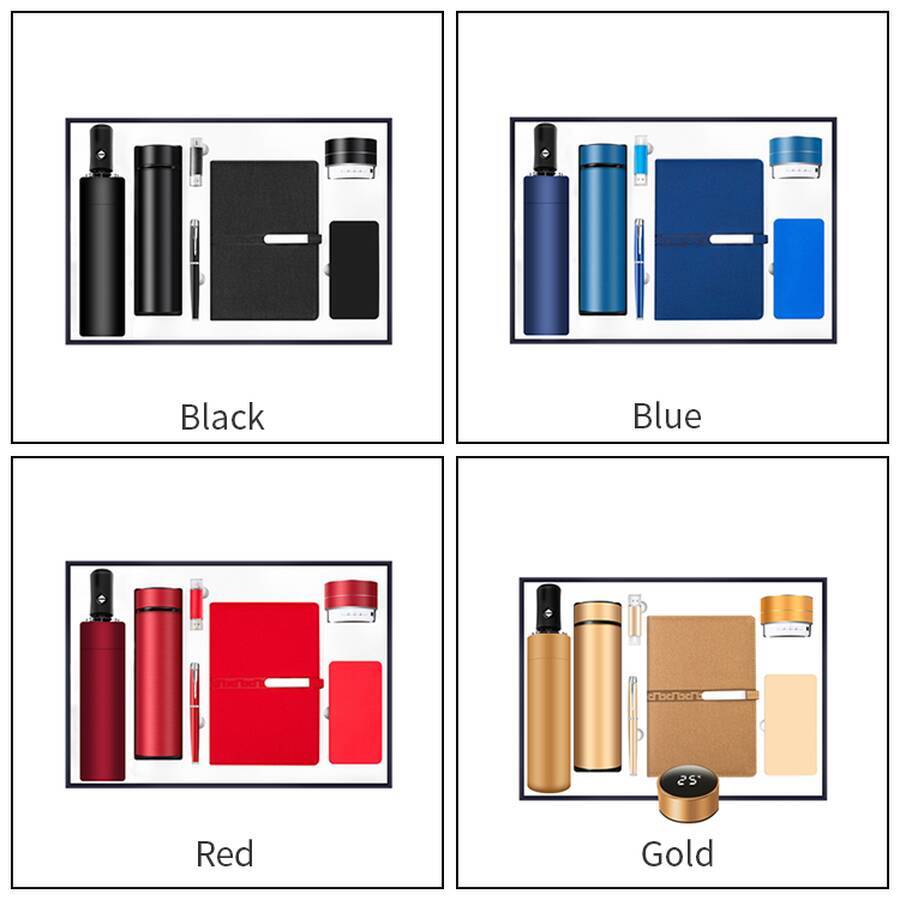
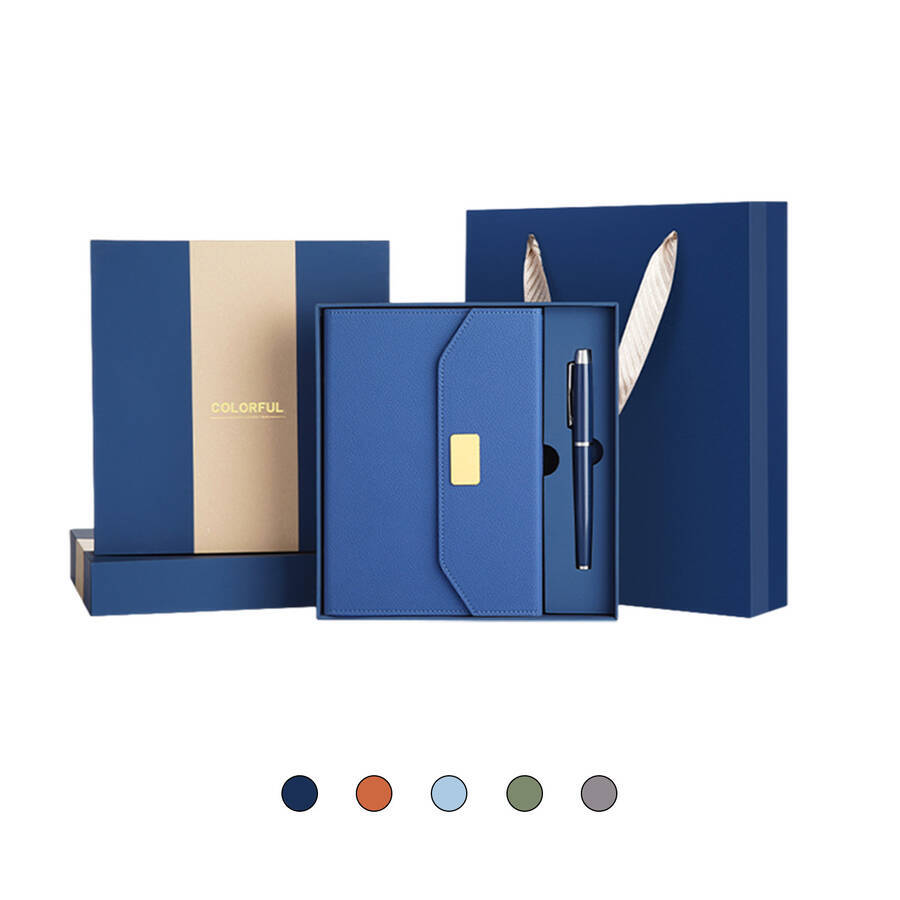
Product dimensions influence more than appearance. A small change in bottle height, notebook width, or accessory thickness can alter the insert, gift box, and outer carton. Review the products as one packed arrangement before the structure is approved.
Surface shape matters as well. Curved, narrow, textured, recessed, or reflective areas may limit branding choices. Mixed materials can also require different logo methods and separate proofing. These factors add coordination even when the individual product prices appear simple.
Plan substitutions before cost pressure appears
Substitution planning gives the quotation room to change without weakening the purpose. The brief can identify the preferred core item, an acceptable alternative, and the features that must remain. A replacement may need similar dimensions, use, material direction, or logo visibility.
This method is more useful than requesting an undefined cheaper version. A clear alternative protects the program’s function and makes cost comparisons easier. The box and insert can also be reviewed before a substitution creates an unexpected structural change.
Optional products should be labeled from the beginning. When the estimate needs adjustment, these items can be reviewed first, while the protected function and essential presentation remain intact.
Recommended reduction order
- Remove products that do not have a distinct role.
- Simplify repeated logo placements and decorative finishes.
- Choose compatible dimensions to reduce insert and carton pressure.
- Standardize color, cards, or sleeves across destinations.
- Change the protected core item only when the main purpose remains protected.
For readers who need product-combination ideas rather than budget allocation, KMSUPERB’s guide on how to build coordinated gift sets covers that separate decision. This article stays focused on budget protection, packed dimensions, substitutions, and trade-offs.
Control branding through hierarchy, not logo repetition
Branding cost depends on the number of surfaces, color count, material, artwork complexity, and required consistency. The same logo can behave differently on metal, paper, fabric, plastic, or coated surfaces.
The first cost driver is the number of branded components. One logo on the core product creates a simpler project than logos on every product, box, sleeve, card, and label. Full-set branding may still support a campaign that needs strong visual repetition. The level should follow the communication goal.
Placement creates another variable. Flat, central areas may support straightforward artwork review. Curved, narrow, recessed, textured, or reflective surfaces may need closer checking. Small products can also limit line detail and readable logo size.
Color count can also affect the process direction. A one-color mark may suit engraving, printing, embossing, debossing, foil, or another method, depending on the surface. Multi-color artwork may need a different approach or a simplified design.
Different materials change contrast and visual weight. The same artwork may look strong on paper but subtle on metal. Likewise, one logo size may not appear balanced across a bottle, notebook, pouch, and box. A coordinated system may therefore use different sizes while keeping one visual hierarchy.
Core product or main box
Use the strongest brand presence where it creates the first or longest-lasting impression.
One supporting item
Add a restrained mark only when it strengthens consistency rather than repeating the same message.
Card, sleeve, or insert
Place event details and longer copy on packaging rather than overloading every product surface.
Prepare artwork to reduce revision work
Vector logo files, brand color references, placement notes, and preferred logo width create a stronger starting point. Low-resolution files or vague instructions invite interpretation. Better inputs protect both visual consistency and project efficiency.
KMSUPERB’s printing process guide can support early discussions about suitable customization directions. Final suitability still depends on the product, artwork, surface, quantity, packaging, and destination.
Treat packaging as a functional cost system
Packaging affects presentation, protection, packing work, carton density, and freight. The box, insert, sleeve, card, outer carton, and carton marks should therefore be planned together.
Box type is only the first choice. Folding cartons, rigid boxes, kraft-style structures, sleeves, and other formats may support different programs. Size often matters as much as construction. Excess empty space can weaken the internal layout and reduce carton density.
The insert controls product position and the opening experience. It should secure items, prevent unwanted contact, and make removal simple. The suitable structure depends on product shape, weight, finish, quantity, and destination.
Sleeves offer a flexible identity layer. One structural box can support several events through different graphics, cards, or labels. A sleeve can also carry seasonal or department-specific information without changing the main box.
| Packaging layer | Main role | Budget influence | Planning question |
|---|---|---|---|
| Product protection | Limits movement, scratches, dents, or pressure | Adds sleeves, wraps, bags, or separators | Which surfaces need separate protection? |
| Inner insert | Organizes products and controls presentation | Changes with shape, weight, and layout | Can one insert secure every item? |
| Gift box | Creates the main opening sequence | Depends on structure, size, material, and finish | Does the box match the delivery path? |
| Sleeve or card | Adds flexible campaign communication | Adds artwork, print, and packing steps | Can one box support several programs? |
| Outer carton and marking | Protects sets and supports allocation | Influences carton count, handling, and sorting | Which destination codes are required? |
Reduce packaging cost without weakening presentation
Start by reducing unnecessary box volume. A compact arrangement often looks more deliberate because every item has a clear place. Use one strong visual element, such as a sleeve, card, or label, instead of several decorative finishes.
Neutral structural packaging can also support flexible branding. One box format may serve several programs through different sleeves or cards. Coordinated product colors can do part of the visual work, reducing the need for heavy printing.
Insert complexity should be reviewed with protection in mind. A simpler insert is useful only when it still controls movement and contact. Removing essential support may lower the visible packaging line while increasing transport risk.
Plan samples, revisions, shipping, and split delivery together
Samples and logistics are not late administrative details. They influence artwork decisions, packaging structure, destination versions, and internal approval.
Use samples to answer specific decisions
Samples affect more than direct cost. They require artwork preparation, communication, review time, handling, and decision control. The brief should explain what needs approval and who has authority to confirm it.
A reference sample and a customized sample serve different purposes. A reference sample may help review size, material, color direction, or construction. A customized sample may instead show logo placement, packaging, or project-specific details.
Revisions should follow a controlled sequence. Product choice, logo method, placement, packaging structure, and destination versions should not all change at once. Otherwise, the source of a cost or layout change becomes difficult to trace.
Sample expectations should appear in the quote brief. The request may identify a reference product, branding proof, packaging mockup, or assembled review. Every requested sample should connect with a clear decision.
No sample plan should assume a fixed fee or schedule. Those details depend on the product, quantity, customization, packaging, artwork, and review level. Instead, the project brief should request a clear explanation of the proposed approval route.
Review shipping through the finished packed set
Shipping should not appear only after product approval. Weight, volume, carton density, destination, and delivery structure influence the complete project. Logistics assumptions should enter before the product and packaging choices become visually fixed.
Weight and volume need to be reviewed together. A compact dense set creates a different freight profile from a light but oversized box. Protective packaging can increase both measurements. The project should evaluate the finished packed arrangement, not only separate products.
Carton density describes how efficiently completed sets fit into shipping cartons. Better density can reduce unused space and simplify handling. The tightest arrangement is not always the safest. The final plan must balance efficiency with product and box protection.
Split delivery changes more than freight
Multiple receiving points can affect carton counts, carton marks, address files, receiving contacts, card versions, language versions, labels, internal references, and arrival targets. Split delivery is also a packing and version-control decision.
- Full destination address
- Receiving contact
- Set and reserve quantity
- Required arrival date
- Receiving hours or access limits
- Carton mark or department code
- Card, sleeve, label, or language version
- Mixed-carton restrictions
- Spare component instructions
- Partial-carton handling rules
Split delivery should be planned as soon as more than one receiving point exists. Even two offices may require different carton counts, marks, contacts, and arrival targets. Waiting until packing begins can create relabeling, repacking, or quantity changes.
Arrival planning should include internal handling time. Receiving teams may need to count cartons, inspect sets, prepare event bags, or transfer stock. The required arrival date should include a practical buffer before the program date.
Use a trade-off matrix and submit a quote-ready brief
When the estimated scope exceeds the budget ceiling, equal reductions can weaken function, presentation, protection, and delivery control at the same time. A better approach protects the main purpose and removes low-value complexity first.
| Adjustment | Effect on function | Effect on presentation | Operational effect |
|---|---|---|---|
| Remove one optional accessory | Usually low | Low when hierarchy stays clear | Reduces packing and volume |
| Reduce logo placements | No direct effect | Low with a clear hierarchy | Reduces proofing and versions |
| Use a standard box with a custom sleeve | No direct effect | Often remains polished | Reduces structural variation |
| Reduce unused box space | No direct effect | Often improves internal balance | Improves carton density |
| Change the core item | Potentially high | Potentially high | May change box and branding |
Common mistakes that weaken quotation quality
Counting product prices only
This leaves branding, packaging, samples, freight, and split delivery outside the early estimate.
Choosing too many products
A large item count can duplicate functions and create more artwork, protection, inspection, and packing work.
Approving before checking packed size
Separate products may fit the budget but create an inefficient insert or an oversized box.
Leaving approval roles unclear
Conflicting feedback can change products, artwork, and packaging at the same time.
Sharing only the event date
The event date does not show when goods must arrive for counting, inspection, and internal handling.
Comparing different scopes
One quotation may include custom packaging and split delivery while another covers standard packing only.
Information needed for a realistic scope
- Target use or event
- Recipient group and setting
- Complete-set and reserve quantities
- Protected core function
- Required supporting functions
- Acceptable substitutions
- Budget ceiling and included scope
- Logo file and brand colors
- Number of branded surfaces
- Box, insert, sleeve, or card needs
- Sample and approval requirements
- Destination list
- Split quantity by location
- Carton marks or internal codes
- Required arrival date
- Fixed and flexible requirements
Make the next quotation easier to compare
- Use one complete scope sheet for every option.
- Rank product value, presentation, and delivery priorities.
- Record substitutions, sample needs, and destination versions before approval.
Frequently asked questions
What cost items should be included in the total project budget?
A complete budget should account for products, branding, packaging, samples, packing work, freight, and delivery coordination. Multiple destinations may also require labels, carton marks, separate cards, or version control.
How can cost be reduced without weakening presentation?
Remove optional products without a clear role, simplify repeated logo placements, reduce unused box space, and standardize cards or sleeves where possible. Keep the core function and essential protection intact.
How do custom boxes and inserts affect the project scope?
Custom boxes and inserts affect dimensions, artwork, product protection, packing, carton density, and freight. One packaging change can therefore influence several cost layers at once.
When should split delivery be planned?
Split delivery should be planned as soon as more than one receiving point exists. Internal departments or event zones may also require separate labels, quantities, and arrival instructions.
What information is needed for a realistic quotation?
The request should include quantity, target use, product direction, budget ceiling, logo file, packaging level, sample needs, destinations, split quantities, and required arrival date. Fixed requirements and flexible elements should also be separated.
Turn the budget framework into a quote-ready project brief
A strong plan protects the main purpose before reducing cost. Product usefulness, branding hierarchy, packaging protection, approval control, and delivery structure should support one another.
For a structured business gift set quotation, provide quantity, logo file, target use or event, packaging level, destination, split delivery requirements, sample needs, and required arrival date.
Contact KMSUPERB for a quotation