A business gift budget should not be divided evenly just because the quotation has several cost lines. The main product needs to feel worth keeping, branding needs to make the set recognizable, and packaging needs to protect and present the contents without taking money away from the parts the recipient will actually use.
For a custom business gift set, the right balance depends on quantity, recipient, product mix, logo method, packaging level, delivery route, and required arrival date. The useful question is not “How much should packaging cost?” but “Which part of this set changes the experience enough to deserve more of the budget?”
How to Allocate a Business Gift Set Budget
There is no useful universal percentage for products, branding, and packaging. A desk set handed out at one office and a client gift shipped to 200 individual addresses may have the same target cost per unit, yet the second project needs more protection, labeling, and handling. A VIP presentation may use fewer products but place more attention on the main item and the way it is presented.
A better starting point is to decide what must survive if the budget is reduced. In most projects, the hero product and basic delivery condition come first. Supporting items, extra logo positions, decorative packaging, and recipient-level personalization should earn their place after those essentials are protected.
This keeps the budget tied to value instead of appearance. When a set feels weak, the answer is rarely “add more small products.” It is usually better to strengthen the main product, make the message clearer, or improve the packaging only where protection or presentation actually needs it.
Protect the main product. If the item people will keep and use feels cheap or irrelevant, extra packaging will not rescue the set.
Add branding with a clear job. One durable logo plus one good message is often stronger than repeating the same mark on every surface.
Use packaging where it changes the result. Presentation, protection, organization, and version identification are valid reasons to spend more.
Leave room for fulfillment. Carton labels, individual shipping, destination splits, and reserve units can change the finished project cost even when the product list stays the same.
When the budget has to come down
Cut the parts that add the least value first. An unrelated third accessory, a second logo position, an oversized box, or a permanent name on every item may be easier to remove than the product people will actually use. If the main item already suits the program, simplify repeated decoration before removing the message card or transport protection that helps the set arrive correctly.
This is also a better way to compare supplier proposals. A lower-cost version should show what has been simplified and why. If the only change is a weaker hero product while everything decorative stays the same, the saving may be visible in the wrong place.
Put Product Value Before Product Count
A longer product list can make a quotation look generous, but recipients do not experience a gift as a spreadsheet. They notice whether the main product suits their routine, whether the pieces make sense together, and whether the set feels deliberate. Three average items are not automatically better than one strong main item with one useful support.
Start with the use case. Drinkware can lead an office, travel, wellness, or meeting set. A notebook can lead a planning or executive set. Compact technology can make sense for hybrid work or travel. Once the main direction is clear, each extra item has a simple test: does it extend the same use, or is it only filling space?
When another item is worth the cost
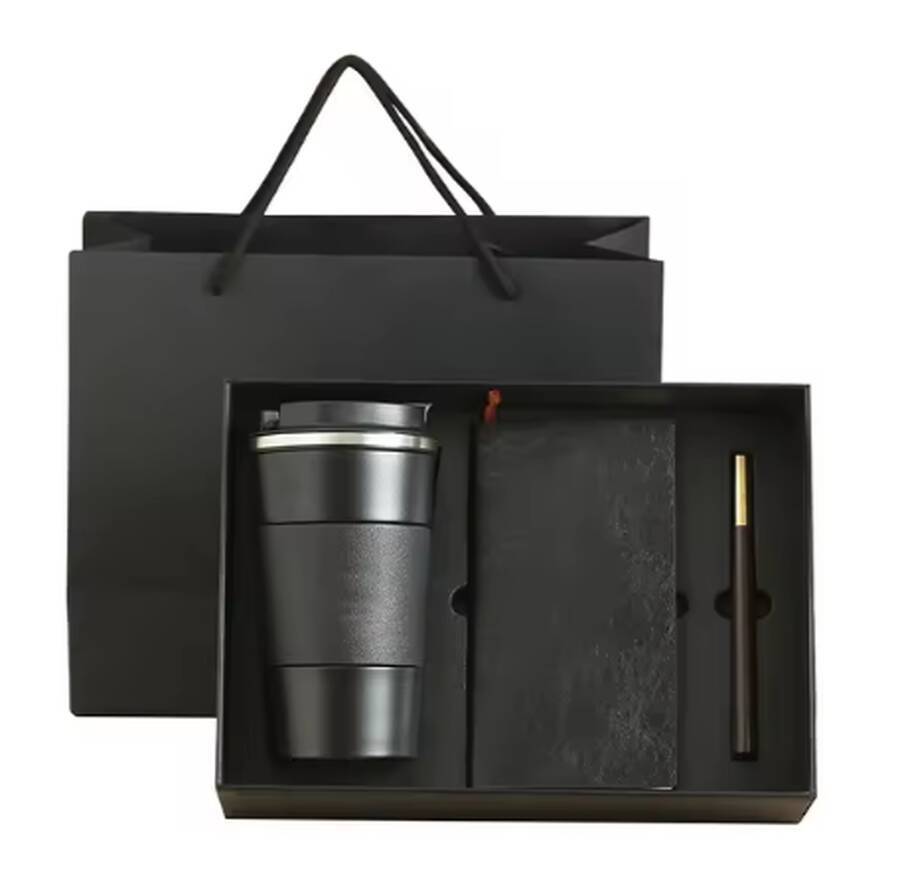
An additional product is useful when it completes the routine. A notebook and pen belong together because the relationship is immediate. Drinkware and a notebook can work for commuting and desk use. A pouch can be useful when several small pieces need to stay together during travel. The connection should be obvious without a long explanation.
Skip the extra item when it exists only to make the box appear fuller. That money can often improve the hero product, move to a better logo method, or pay for the protection needed during delivery. A smaller, coherent set usually looks more intentional than a crowded assortment.
Do not confuse higher price with better fit
The most expensive product is not automatically the best hero item. A business gift works when the item suits the recipient, the occasion, and the way it will be used after the handover. A higher-cost desk accessory may be less useful than good drinkware for a mobile team; a travel product may be unnecessary for recipients who mainly work at one location.
That is why the product budget should be judged by relevance and expected use, not only by unit price. If two options sit in a similar cost range, choose the one that makes the rest of the set easier to build around.
Spend on Branding Where It Will Be Seen and Remembered
Branding should make the gift recognizable without turning every surface into advertising space. A logo on the main product may remain visible for months, while a message card explains the reason for the gift at the moment it is received. Those two jobs are different, and they do not need to be repeated on every supporting item.
For many business programs, one permanent product mark plus one well-designed card is enough. A box logo, sleeve, or label becomes useful when the set needs stronger presentation, campaign identification, or quick sorting by recipient group. Extra branding should solve a communication or handling problem, not simply use up available print areas.
If the long-term value is product use, put the durable logo there. If the program needs a specific thank-you message, milestone, event name, or regional language, let the card or sleeve carry that information. This keeps the product cleaner and makes campaign details easier to change.
Use flexible personalization when lists may change
Names, titles, languages, room numbers, and regional messages create more approval and replacement work than one common logo. When the recipient file is still changing, a named card, sleeve, or label is usually easier to control than permanent individual marking on every product.
This also protects reserve stock. A neutral product with a variable card can be reassigned after a late addition, damaged unit, or spelling correction. A permanently named product has far less flexibility.
Personalization is worth the extra cost when the relationship value clearly justifies it and the data is reliable. For a broad employee or conference program, group-level messages may create enough relevance without introducing hundreds of individual artwork versions.
Packaging Should Present, Protect, or Organize
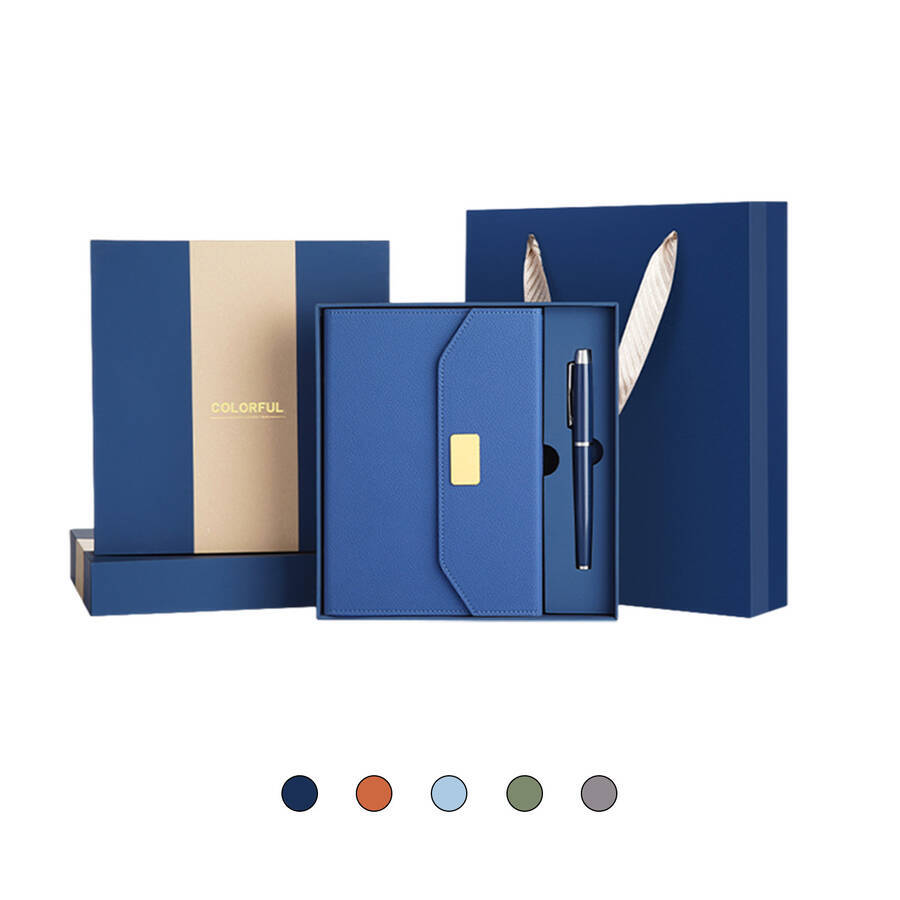
Packaging earns budget when it performs a real job. It can create a cleaner opening experience, hold several products in position, protect printed surfaces during delivery, or help staff identify the correct version. If a layer does none of those things, it may be decorative cost rather than useful cost.
A presentation box and a shipping carton are not the same thing. A rigid inner box can look excellent and still need an outer carton, protective sleeve, cushioning, or movement control for individual courier delivery. A bulk office handout may need much less outer protection because finished sets move together in master cartons.
Do not pay for empty space
Oversized boxes can increase board, insert, master-carton volume, storage space, and shipping volume without improving the gift. A box that fits the products cleanly usually feels more intentional and is easier to pack, store, and carry.
Before approving a larger or heavier presentation, compare what that extra spend would do if it moved back into the main product or transport protection. If the recipient will throw away the extra layer immediately and the set does not need it for protection, the budget may be working harder elsewhere.
Match packaging to the delivery route
If all sets arrive at one office and are handed out internally, the presentation packaging can be designed mainly around organization and appearance. If each unit is shipped to a separate address, the outer protection, label area, and movement control matter more. The recipient may never see the master carton, but that carton still affects whether the presentation box arrives in good condition.
This is why packaging should be approved with the delivery route in mind. A beautiful inner box that is not suitable for the planned shipping method can create extra cost late in the project.
How Recipient Type Changes the Budget Mix
Recipient type should change the allocation, not automatically create a completely different sourcing project. The same hero product can often stay across several versions while the supporting item, message, packaging, or delivery method changes.
The useful comparison is not “standard versus premium.” It is “what does this recipient version need to do differently?” That question gives the budget a reason to move and avoids creating expensive tiers with no practical difference.
Put more emphasis on useful products, consistency, and efficient distribution. A cleaner box and fewer variable details can protect the product budget when quantities are high or deliveries are split across offices.
Balance product quality with message context and delivery protection. A strong card or sleeve can make the reason for the gift clear without forcing the product mix to become more expensive.
Fewer products can work well when the hero item, presentation fit, inspection, and handover are more controlled. The extra budget should improve precision and finish, not simply increase box size.
Portability, quick identification, and reserve stock can matter more than elaborate presentation. Compact packaging may free budget for a more useful product and make registration or venue distribution easier.
Keep one brand direction while changing the spending priority
A shared logo position, color direction, and message style can connect every version. The employee set may add a practical support item, the client version may add stronger shipping protection, the VIP version may use a fitted insert, and the conference version may simplify the box for portability.
This is usually more efficient than starting four unrelated product searches. It keeps the program recognizable and makes quantity splits, artwork approvals, and later reorders easier to manage.
Compare Gift Set Quotes on the Same Basis
The lowest unit price is not always the lowest finished project cost. Two quotations can look similar while one includes only the products and another includes logo application, inserts, gift box, outer packing, carton labels, or destination preparation.
Before choosing a supplier or configuration, make sure the product specification and the work around it are comparable. A cheaper option stops being cheaper when required branding, packaging, or protection has simply been left outside the quoted price.
Use the arrival date to control late-cost surprises
A last-minute address split, extra language version, changed recipient list, or revised box can affect packing even when the products are already finished. Set final deadlines for artwork, variable data, and destination quantities before the order reaches the packing stage.
If reserve units may be needed, decide early which parts can stay neutral. Flexible cards and labels can protect the schedule without forcing every spare product to carry a permanent recipient name.
For the first quotation, you do not need every detail finalized. You do need a clear target budget, quantity, use case, delivery route, and arrival date so the supplier is comparing workable combinations rather than unrelated product ideas.
Frequently Asked Questions
Should most of the budget go to the products?
Usually, the hero product should carry the strongest practical or presentation value. The exact share depends on the project, but branding and packaging should support the gift rather than compensate for weak products.
Does every business gift set need a custom presentation box?
No. A custom box is most useful when presentation, product organization, protection, or version identification matters. For high-volume handouts, simpler packaging may leave more budget for the products themselves.
How can branding look stronger without adding more print positions?
Use one durable logo on the main product and let a card, sleeve, or box label carry the campaign message. This usually creates clearer recognition than repeating the same logo on every item.
What information should be sent for a budget-based quotation?
Send the target budget, quantity, recipient or occasion, preferred product direction, logo file, packaging preference, delivery destination, and required arrival date. Add names, languages, or multiple destination splits only when they apply.
Send the budget first, then compare workable combinations
You do not need a finished product list before requesting options. Send the target budget per set or total project budget, quantity, recipient type, preferred product direction, logo file, packaging preference, destination, and required arrival date. KMSUPERB can then compare combinations on the same project basis instead of quoting unrelated products.
Example inquiry: “300 client gift sets, target budget US$15–18 per set, notebook or drinkware direction, one-color logo, compact gift box, delivery to Germany, required before 18 October.”
Request a Business Gift Set Quote