Corporate gift set quality control should not begin when somebody opens random cartons a few hours before dispatch. The effective control point starts earlier: procurement, QA, the brand team and the supplier agree which sample, artwork files, color references, packing layout and written specifications define the finished order.
That matters because a gift set can contain several individually acceptable products and still fail as a finished set. A notebook may carry the correct logo but the wrong artwork revision. A pen may be the correct model but packed with the wrong color set. Every component may exist in the warehouse, yet some finished boxes can still be missing a refill, USB drive, printed card or other approved accessory.
The pre-shipment release decision should follow a clear principle: compare finished goods with controlled references, record what was actually checked, isolate deviations, and release the shipment only after required corrections or approvals are closed.
The inspector should not be deciding what “good” means while looking at finished cartons. The approved reference version, inspection points, required evidence and authority to accept, rework or hold goods should already be defined.
Turn the Approved Order Into a Release Control Plan
A workable pre-shipment gift set inspection begins with an agreed control plan. It should connect the purchase specification with the physical set that will be shipped. At minimum, the team needs to know which components belong in the set, which product and artwork versions are current, which color references apply, how the products should sit inside the packaging, and what information should appear on outer cartons.
The distinction between confirmed and assumed is important. If no numerical color tolerance was agreed, an inspector should not create one during final inspection. If the project documents do not define a particular cosmetic limit, that point should be escalated for confirmation rather than converted into a new acceptance rule.
If the product combination or presentation is still changing, inspection planning is premature. Review the available corporate gift sets and freeze the intended set structure, branding and packing direction before defining the final QC checkpoints.
A “Golden Sample” Is Useful Only When Everyone Knows What It Approves
Sample approval is often described too casually. A message saying “sample approved” does not tell an inspector whether that approval covers the product model, exact color, logo execution, component count, box presentation or every detail at once.
A stronger gift set sample approval record identifies the reference and its limits. The control version may be a physical pre-production sample supported by approved artwork, color references and packing instructions. What matters is not the label “golden sample,” but whether another person can determine exactly which feature should be compared with which reference.
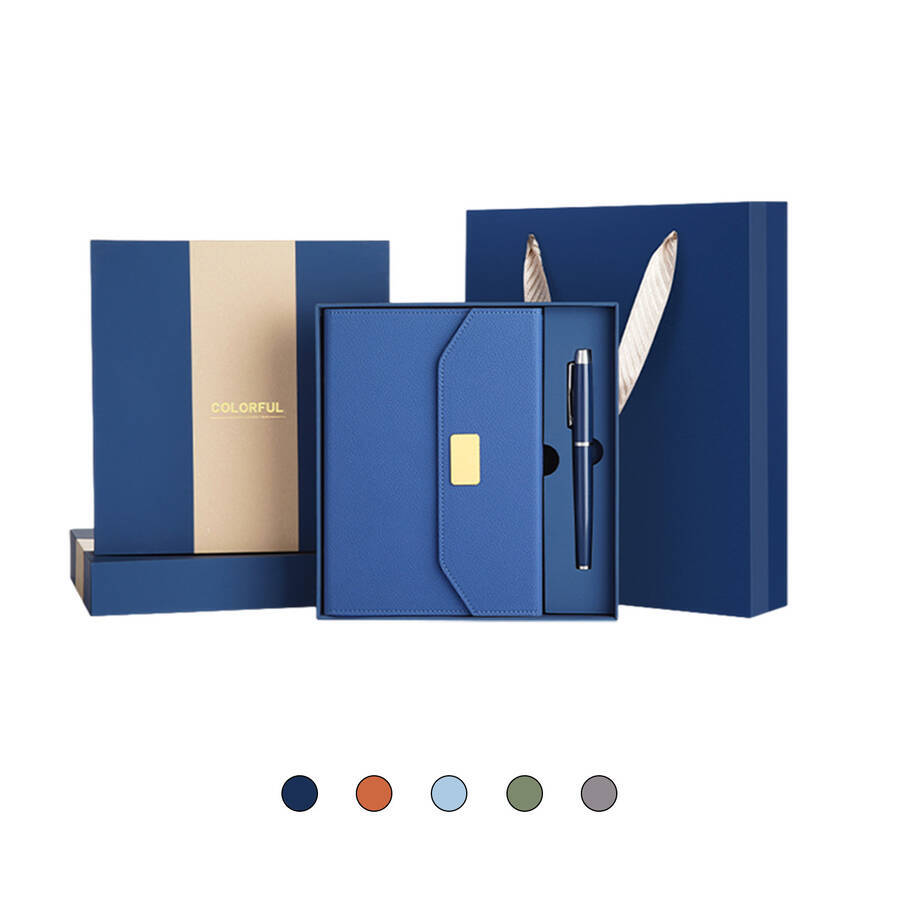
This example also shows why sample approval should be configuration-specific. If one sample represents a blue 2-piece version, it should not automatically be treated as approval for a different color or a 4-piece set unless the project records explicitly say which references apply to those additional variants.
Record the sample version, product combination, visible finish, component orientation, box arrangement and the physical details the sample is intended to approve.
Identify the approved artwork filename or revision, logo position information, printed insert version, color reference and any packing document tied to the order.
Note substitute materials, provisional packaging, unapproved colors or any other feature that should be controlled by a separate specification instead.
A useful sample approval record answers eight questions
Check Color and Logo Against the Reference — Then Across the Bulk Order
Color matching inspection has two jobs. The first is reference matching: does the inspected component correspond to the approved color reference or approved physical sample? The second is batch consistency: do units that should look alike remain reasonably consistent with one another?
These questions should not be collapsed into one. A production run can be internally consistent but consistently different from the approved reference. The reverse is also possible: several units may be close to the target individually but show visible variation when placed side by side.
Different substrates and decoration processes can also affect how a brand color appears. Paper, coated surfaces, metal and other materials may not present color in exactly the same way. The inspection should therefore follow the agreed reference for each component rather than assuming every surface must appear identical under every condition.
Compare the inspected item with the sample, swatch, code or other color reference agreed for that specific material and finish.
Place inspected units together and look for unexplained variation between pieces that should belong to the same approved version.
Logo inspection needs version control, not just a visual glance
A logo can look professionally applied and still be wrong. Inspectors should verify the artwork revision, spelling, orientation, presentation side and placement against the approved reference. On a multi-component set, repeat the check on every branded surface rather than approving the branding based on the most visible item alone.
Useful evidence includes a close-up of the decoration, a wider image showing its position on the product, and the reference filename or sample version used for comparison. If a measurable placement or color tolerance has been formally agreed for the order, record the result against that requirement. If no such tolerance exists, do not invent one during the inspection.

Packing Inspection Has Three Different Levels
A carton count cannot prove that every gift set is complete. Equally, opening one presentation box cannot confirm that outer-carton identification is correct. Packing quality control works better when the inspection moves through three levels: the contents inside the gift set, the assembled presentation pack, and the shipping carton around it.
This is especially important when several small components are packed together. A refill, USB drive, cable, printed card, sleeve or other small piece can be omitted during assembly and remain invisible once the box is closed.
A box can contain the right number of items and still be wrong. The notebook may be the wrong color, the pen may belong to another set version, or the printed insert may use an outdated artwork revision. Packing inspection should therefore confirm both presence and identity.
If the set is still being designed rather than inspected, the article on how to build business gift sets with drinkware, notebook and tech items covers the earlier product-mix and packaging decisions. At the pre-shipment stage, the task is narrower: confirm that the finished assembly matches what was already approved.
Agree the Sampling Logic and QC Record Before the Inspector Opens Cartons
There is no responsible universal sampling percentage for every corporate gift project. Inspection scope depends on the agreed order requirements, the number of variants, packaging complexity, previous rework, the consequences of a defect and any buyer-specific inspection procedure.
The practical requirement is that the sampling approach should represent the order rather than accidentally concentrate on one easy-to-reach version. If a shipment contains several colors, artworks, recipient groups or pack configurations, the inspection plan should make those splits visible.
The same principle applies to sealed cartons. Selection should follow the agreed inspection plan across the available shipment rather than checking only cartons already opened for warehouse convenience. Any formal AQL, sample size or acceptance criteria must come from the confirmed project requirement; it should not be invented for the report.
Where a purchasing organization already uses a formal attribute-sampling system, follow the specified inspection plan rather than creating a percentage at inspection time. For technical background, the ISO 28590 introduction to the ISO 2859 series explains acceptance sampling by attributes and the related family of sampling systems. The actual sampling plan and acceptance criteria still need to be confirmed for the specific order.
Pre-shipment QC evidence map
| Control Point | Reference | Useful Evidence | Release Question |
|---|---|---|---|
| Set contents | Approved component list | Open-set photo and recorded count | Is every required item present and correct? |
| Color | Approved reference for the component | Controlled visual comparison record, supporting photos, and agreed color measurements where required | Does bulk match the agreed reference and remain consistent? |
| Logo | Approved artwork and placement reference | Close-up plus full-product positioning photo | Are artwork, orientation and position correct? |
| Packing | Approved sample or packing layout | Open-box and closed-box photos | Is the finished presentation assembled correctly? |
| Outer cartons | Agreed packing and shipping information | Carton count, mark photos and condition notes | Can carton identity and quantities be reconciled with the shipment? |
What a useful QC record should make clear
The report should allow somebody who was not present at inspection to reconstruct the decision. Record the purchase or project reference, inspection date, approved sample or file versions used, relevant variants or cartons checked, observations, photos, identified non-conformances, corrective action and recheck result.
Avoid photograph collections with no context. A close-up of a logo has limited value if the reader cannot tell which artwork revision it was checked against. A picture of several cartons is not a carton-count record unless the corresponding quantities and shipment references are clear.
When Inspection Finds a Problem, Separate Rework From Approval Questions
Finding a deviation is only the beginning of non-conformance handling. The next question is whether the observed condition violates a confirmed requirement, whether affected goods can be identified, and what action has been authorized before release.
Some findings are straightforward to contain: a missing accessory, mixed artwork revision, wrong packed variant or incorrect carton identification can be traced to an agreed requirement. Other findings may expose a specification gap. If a visual difference was never defined by an approved reference or acceptance criterion, the QC team should document it and obtain a decision rather than quietly inventing a tolerance.
Use this path where the goods clearly conflict with an approved requirement, such as a missing component, wrong artwork revision or incorrect packed variant.
Use this path where a difference is visible but the original specification does not define a valid pass/fail limit.
Release when inspected goods meet the approved requirements or when an authorized deviation has been documented and accepted.
Do not lose traceability during rework
A frequent weak point is the transition from inspection to correction. Goods are unpacked, reworked and repacked, but the final record only states that the issue was “fixed.” A better record identifies what was affected, what was changed, what quantity or group was rechecked, which reference was used and who authorized the final disposition.
Rechecking against the original requirement matters because rework can solve one issue while creating another. Replacing a wrong insert, for example, still requires confirmation that the set was reassembled completely and that the correct version is now inside the correct pack.
Seven Questions to Answer Before the Bulk Shipment Is Released
A long QC report is not automatically a strong one. Before approving dispatch, procurement or QA should be able to answer these seven questions from the inspection record without reconstructing the project from scattered emails.
The approved sample, artwork and packing references should be identifiable and current.
Colorways, artwork versions and different pack configurations should not disappear inside one general inspection result.
Check color reference, artwork revision, orientation and placement across every relevant component.
The evidence should show that required components are present and that each one belongs to the correct set version.
Opening view, orientation, insert arrangement, closing condition and visible presentation should be checked after assembly.
Carton count, identification, quantities and agreed marks should correspond with the shipping documentation.
Do not treat “rework completed” as the end point. The corrected goods should have documented recheck evidence before release.
What to Send When Requesting a Pre-Shipment Check
Corporate gift set quality control becomes much easier when the inspection request contains the actual approval package rather than a generic instruction to “check quality.” Before the shipment reaches its release point, bring together the information that determines what should pass.
Final component list, approved sample identification, artwork revisions, color references and agreed exceptions.
Approved set layout, insert and printed-material versions, outer-carton information and any project-specific packing instructions.
Inspection scope, buyer-required acceptance criteria, report format, escalation contacts and shipment release authority.
Instead of asking only for “final QC,” send the final component combination, artwork revision, selected color, sample reference and packing requirement. That makes the request actionable and reduces the risk that production and inspection are working from different versions.
Questions That Often Remain Before Shipment Release
These points are worth resolving before inspection closes, particularly when several products, decoration methods or packaging elements are combined in one order.
What should be checked before a bulk corporate gift set ships?
Check the approved product versions, set completeness, artwork and logo placement, color against the agreed references, presentation packing, printed-material revisions, carton identification and carton count. Required corrective actions should be closed and rechecked before shipment release.
Why is a reference sample important?
It gives production and inspection a common physical reference for the features it actually represents. Its value increases when it is identified by version and connected to approved artwork, component lists, color references and packing instructions.
How should color and logo consistency be checked?
First compare inspected products with the approved reference for that surface, then compare units within the bulk order for unexplained variation. For logos, also verify the artwork revision, spelling, orientation and placement. Use numerical tolerances only when they were actually agreed for the project.
What should be recorded in a packing inspection?
Record the contents of opened sets, missing or incorrect items, component orientation, insert and box condition, printed-material versions, relevant carton marks, carton count, photos of inspected packing, identified deviations and the disposition or recheck result.
Should the inspector use a standard sampling percentage for every gift set order?
No universal percentage should be assumed. The sampling method, sample size and acceptance criteria should follow the confirmed order requirement and should account for relevant variants or pack configurations. If the project specifies a formal sampling standard, use that agreed standard.
What happens when inspection finds a difference that was never defined in the specification?
Document the difference clearly and request a project decision. Inspection should not create an unsupported tolerance simply to produce a pass or fail result. The buyer or authorized project owner should confirm how the unresolved point affects shipment release.
Still Defining the Set Rather Than Inspecting It?
If product roles, packaging structure or the overall combination are not yet frozen, review How to Build Business Gift Sets with Drinkware, Notebook and Tech Items. Complete those configuration decisions before converting them into pre-shipment inspection checkpoints.
Request a Check Against the Approved Set and Packing Requirements
Before release, prepare the final component list, approved sample or proof reference, artwork versions, color references, packing layout, printed-material versions, carton requirements and the QC evidence expected for the project.
For an existing quoted set, send those references so the pre-shipment check can focus on the exact version being purchased. For a new project, review the corporate gift set range first, then confirm the selected configuration and branding requirements before inspection planning.
This gives procurement, QA and the supplier one traceable basis for deciding whether the shipment is ready to move.