A corporate gift program calendar is most useful when it starts with the day employees actually need their gifts. The set may already be chosen, but the project can still run late if artwork approval, production, shipping or delivery to different offices has not been allowed for. Working backward from that arrival date makes those dependencies easier to see.
Consider a holiday gift order with a fixed handover date but an employee list that is still changing. Or a welcome gift set that works well for new hires until the next group joins and stock has not been replenished. The gifts are not necessarily the problem; the missing decision is.
For each recognition milestone, the calendar needs to make four things clear: what must happen, who owns the decision, when it must be approved and where the finished gifts need to arrive.
A notebook set for one office and a customized holiday order for several locations may need very different schedules. Ask the supplier about the timing for the actual configuration and delivery plan, then allow for your own approvals. A delayed decision is worth revisiting immediately; the delivery date will not move itself.
Why the Delivery Date Comes Before the Gift Selection
It is easy to spend the first meeting discussing products, colors and packaging. The awkward questions tend to arrive later: Has the artwork been approved? Does the quantity include remote employees? Can every office receive its boxes before the event? These are the details that determine whether the original date is realistic.
Begin with the date people need the gifts in hand, rather than the date printed on the event invitation. From there, work backward through delivery, production and the approvals that must happen first. The time allowed for each stage needs to reflect the chosen product and the supplier's confirmed schedule.
The stages in the diagram are a planning guide, not a fixed order for every supplier. A custom set may need a sample; another may not. Either way, allow for production, packing and transit, as well as customs or internal receiving time where relevant. If artwork approval or a purchase order slips, check what that does to the delivery plan before treating the original date as safe.
What to Plan Each Quarter—and What Needs Attention All Year
Not every recognition gift belongs on the calendar in the same way. Onboarding sets may be needed whenever people join. Work anniversaries arrive throughout the year. Quarterly awards follow a recurring cycle, while a company event or holiday has a much less forgiving date. Looking at the whole year helps you spot where those needs overlap.
The difference matters because each occasion gives you a different reason to start planning.
New starters do not always arrive in neat quarterly groups. Review how quickly welcome sets are being used so the next hiring round does not depend on a last-minute order.
If anniversaries are grouped into monthly or quarterly deliveries, agree on a date to finalize the recipient list. Otherwise a few late additions can change a quantity that everyone thought was approved.
A familiar Q1–Q4 rhythm makes planning easier, but one quarter may involve a different team, more recipients or another office. Each cycle still deserves a fresh look at those details.
The holiday is not always the date that matters. If an office needs time to sort or distribute the gifts before staff leave, the boxes must arrive earlier.
An event gift needs to be on site before people arrive, not when the event begins. Allow time for the venue team to receive, count and set out the boxes.
Q1: Map annual recognition milestones, confirm owners and start the first quarterly cycle.
Q2: Review work-anniversary groups, current headcount and onboarding replenishment needs.
Q3: Open planning for upcoming year-end programs; request project-specific production and delivery timing.
Q4: Track final approvals, multi-location deliveries and lessons for the next annual cycle.
This is an example of how to review the year, not a fixed ordering schedule. Set actual dates around your organization's milestones and confirmed supplier timelines.
With the occasions mapped out, it becomes easier to decide which ones need the same gift format and which deserve something different. Teams choosing employee gifts can explore the available sets without losing sight of the delivery dates and recipients.
The planning process can stay consistent without making every gift feel interchangeable. Gallup's research on authentic employee recognition emphasizes meaningful, targeted recognition. That is worth remembering when a company uses the same supplier across several occasions: the logistics may repeat, but the reason for recognizing someone should still come through.
Four Details That Are Easy to Miss Before Ordering
A spreadsheet can look complete even when the team has not settled who is receiving the gifts, how many are needed or where they will go. Before anyone spends time refining the design, these four details are worth pinning down.
“Staff gifts” could mean everyone, one office or a particular anniversary group. Name the people the order is actually for.
Early headcount figures are useful for inquiries, but someone still needs to approve the final number before the order relies on it.
If several teams review the design, make it clear whose final answer allows the order to move forward.
One shipment to headquarters is different from separate deliveries to offices or an event venue. The destination changes the timing.
When Does an Estimate Become the Final Quantity?
An early estimate is not a mistake; it is how many projects begin. Problems arise when that estimate quietly becomes the number used for production. Give the team a clear cutoff for changes and an owner who can approve the final quantity.
For a multi-office order, the total is only half the picture. The supplier also needs to know how many sets go to each site and when those allocations are final.
If a colleague takes over the project tomorrow, can they tell what is final, what may still change, who can approve it and when that answer is needed? Those details are more useful than a status cell that simply says “in progress.”
When to Start Planning Different Types of Recognition Gifts
An onboarding gift and a year-end award may use the same supplier, but they do not need the same starting point. For one, the warning sign is dwindling stock. For the other, it is a fixed date getting closer while the recipient list is still open.
A new starter should not be waiting because the last welcome set has already been given away. Use actual hiring and stock use to decide when the next order needs attention, then factor in the confirmed replenishment time.
If anniversary gifts go out in batches, the recipient list needs a cutoff. Late changes are easier to handle when everyone knows which version the order is based on.
Last quarter's order is a useful starting point, not a ready-made repeat. The recipients, quantities, offices and people approving the artwork may all have changed.
If employees leave for the holidays on Friday, a Friday delivery may already be too late. Use the office's actual handover window.
The events team may need the gifts the day before attendees arrive. Check the venue's receiving arrangements before setting the delivery date.
If the occasion itself still needs to be defined, KMSUPERB's Employee Gifts Buying Guide for Onboarding, Holidays and Company Events provides the adjacent occasion-planning context. Once you know the occasion, the next step is deciding who needs to receive what, and by when.
Why Gift Orders Can Look Ready and Still Run Late
A date on a calendar does not tell you whether an order is ready. The concept may be approved while the budget is still pending, or the quantity may be final while nobody has signed off the artwork. If a purchase order or budget approval is required before production, that date matters just as much as the delivery deadline.
This is where a specific status helps. “Artwork in progress” leaves the next step unclear; “final artwork approved” tells the team the supplier can use the agreed version. The same distinction matters for quantities, destinations and the gift-set configuration.
If one of these decisions is still open, the project may be moving—but it is not yet safe to assume the delivery plan is unchanged. Leave room for your company's review time as well as the supplier's confirmed production and shipping schedule.
What Changes When Gifts Go to Several Offices?
A gift order for several offices sounds simple when it is described as one total number. It becomes more complicated when one office needs its delivery before the others, or a receiving contact changes. Each destination has its own practical deadline.
Agree on the final split before the sets are packed for different locations.
Before the address list is final
- The approved destination information used for the project.
- The number of sets allocated to each destination.
- The responsible receiving contact where required.
- The required arrival date or window for each location.
- Whether all locations follow the same schedule.
- Whether a change at one location also changes the master quantity.
Do Not Leave the Next Order Until the Last Box
For welcome gifts, the next order is easier to plan while there are still sets on hand. Look at how quickly they are being used and how long replenishment will take for the chosen configuration.
For anniversary batches and quarterly awards, the best time to learn is just after a delivery. Which office needed more sets? Was an approval late? Those details can improve the next order, even if the headcount will be different.
How the Recognition Occasion Shapes the Gift Set
The occasion affects more than the message inside the box. A welcome gift may be used every day at work, while a milestone award may call for something distinct. Once the recipients, quantity and delivery arrangements are clearer, product choices become easier to compare.
KMSUPERB offers different directions to explore: a notebook-based set, a drinkware combination and a charger gift set. Each can suit a different moment. The practical choice is the one that fits how the gifts will be used, personalized and delivered.
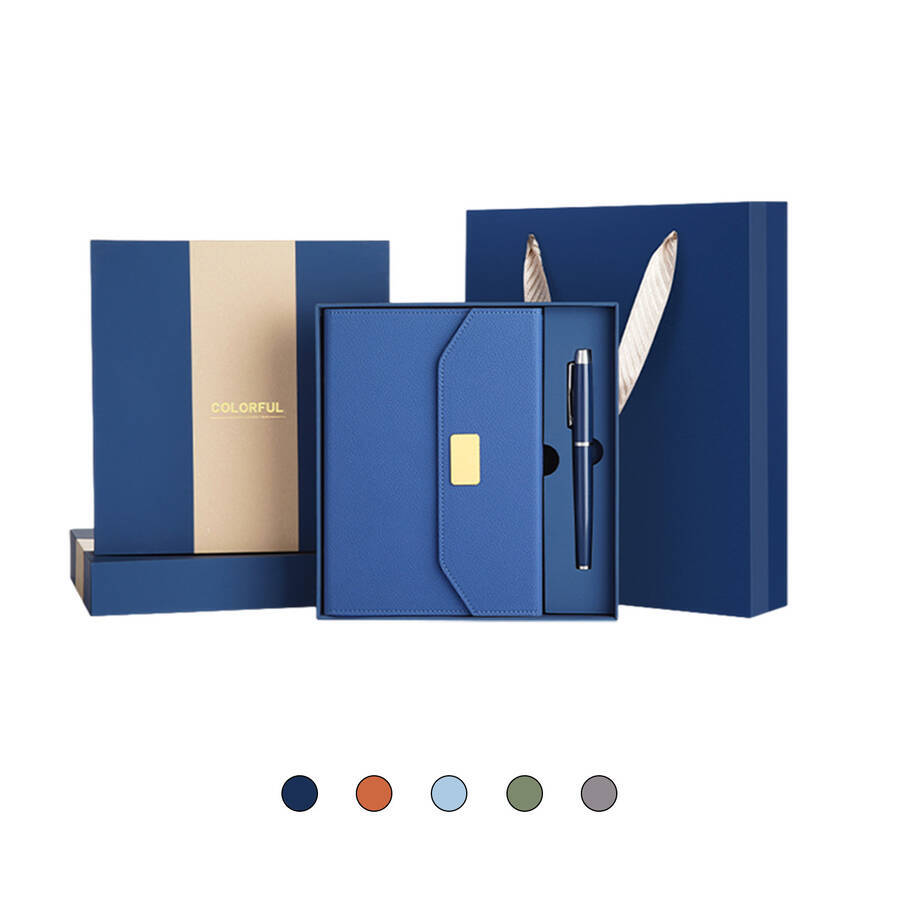
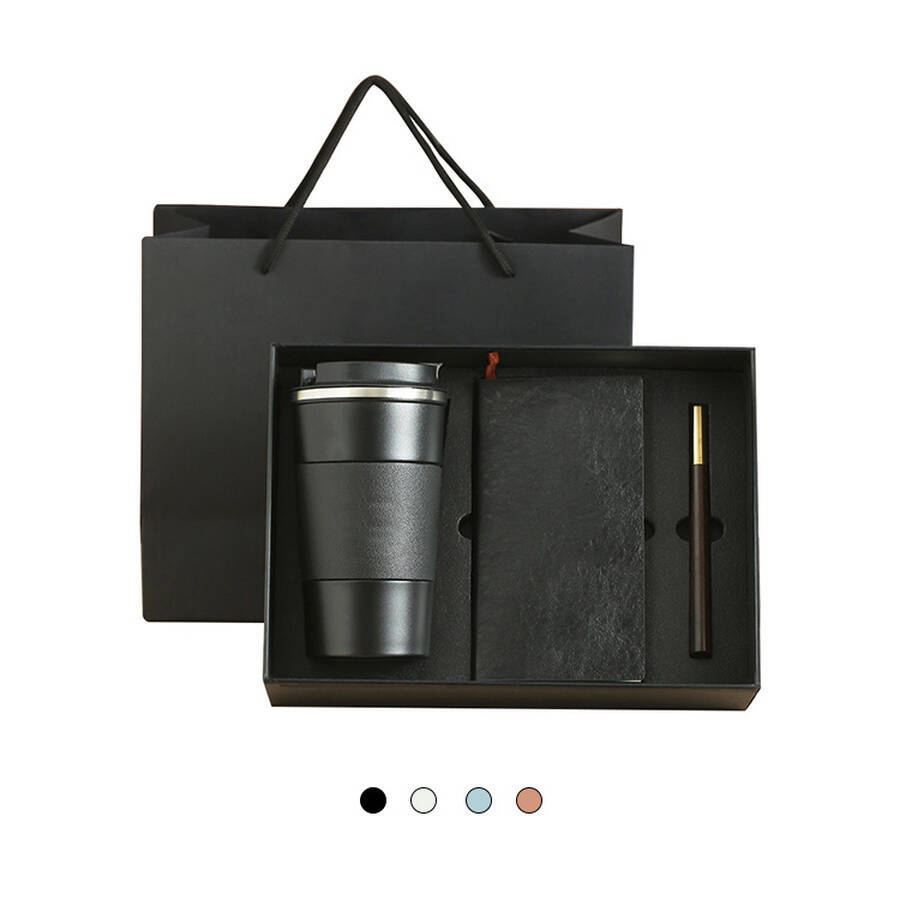

A gift set that looks right still needs to work on delivery day
A set may look impressive in a product photo but be awkward for a project with many individual destinations or a tight approval window. A familiar everyday item may be a better choice for a recurring program, while a different occasion may justify a more distinctive combination.
Use the product pages to compare what is currently available, then ask about the configuration, logo treatment, packing, quantities and delivery timing that apply to your order.
Explore the Corporate Gift Set RangeWhat Belongs on the Calendar—and What Can Stay Elsewhere
A master calendar becomes hard to read when it carries every product idea and price discussion. Keep those details in the purchasing notes. What belongs on the calendar is anything that could delay the order—including budget sign-off or a purchase order if production cannot begin without it.
Someone scanning the schedule should be able to see what could still put delivery at risk.
- Recognition milestone
- Required delivery date or window
- Working and approved quantity
- Quantity and approval owners
- Approval deadline
- Destination allocation
- Current status and next decision
- Long lists of possible gift ideas
- Unapproved creative concepts
- Budget discussions unrelated to a calendar gate
- Old destination lists treated as current
- Previous quantities copied without review
- Informal approval comments without an owner or date
Before You Call the Project On Track
A green status does not mean much if the recipient count is still changing or the shipping locations are unconfirmed. These questions are a useful final sense-check before telling the team the date is secure.
If something is still undecided, leave it visible rather than labeling the whole project complete. That gives the next person a real action to follow up.
What to Share When You Ask for a Corporate Gift Quote
A supplier can do more with “quarterly awards for three offices, arriving before our recognition event” than with “we need gifts for employees.” The calendar gives you the details that make the first conversation productive.
Share the facts you know, and say plainly what has not been decided. There is no need to invent specifications before discussing available sets, branding options and a workable schedule.
Recognition milestone, required date, working or approved headcount, number of delivery locations and the current destination structure.
Product configuration, branding, artwork, samples, packing or schedule details should be confirmed for the actual project rather than copied from another program.
State who provides final internal approval and which date has to be protected once product-specific details are confirmed.
What should procurement send first?
You do not need a finished design to make the first inquiry. The occasion, estimated quantity, delivery locations and in-hand date are enough to start a useful discussion, along with any branding or approvals you already know will be needed.
If you are comparing gifts for several quarters, you can browse KMSUPERB's corporate gifting programs range and shortlist products that suit each milestone before asking for a project-specific quote.
Send the Milestones, Headcount, Locations and Required Delivery Dates
A complete corporate gift program calendar gives a supplier much more useful project context than an occasion name alone. Send KMSUPERB the recognition milestones, quantity or headcount, delivery locations and dates that need to be protected.
Include the product direction being considered and any branding, artwork, sample or approval requirements that still need confirmation. Those open points can then be discussed before they become fixed internal deadlines.
Questions Teams Often Have After the Annual Timeline Is Built
A few practical questions tend to come up once the annual occasions and delivery dates are on the calendar.
What should a corporate gift program calendar include?
At minimum, record the recognition milestone, required delivery date or window, included audience, working and approved quantity, quantity owner, approval owner, approval deadline, destinations, current status and next action. Add sample, artwork, packing or delivery checkpoints when the actual project requires them.
How early should recognition gifts be planned?
Work backward from the required delivery date instead of applying one fixed period to every project. Confirm the timing needed for the actual product, approvals, artwork, any required sample or specification stage, packing and delivery, then add the organization's internal review time.
How can quarterly and milestone gifts share one workflow?
Use the same control fields for every project: milestone, audience, quantity status, owners, approval date, locations, required delivery date and current stage. The trigger changes by program, but the operating structure does not need to be rebuilt each time.
What changes when gifts ship to multiple locations?
Add a destination-allocation checkpoint before packing or delivery planning relies on the final quantities. Track the quantity and required arrival date for each location and make sure location-level changes are reflected in the master total.
Should onboarding gifts use the same product as quarterly recognition gifts?
Not automatically. The workflow can remain consistent while the product direction changes. Onboarding may favor practical workday items, another recognition cycle may call for drinkware, and a milestone or holiday program may justify a technology-oriented set. Confirm the use case before repeating the previous product.
What should happen when an approval deadline is missed?
Review the downstream schedule rather than simply changing the approval date. Identify which later stages depended on that decision and reconfirm whether the required delivery window remains workable for the actual project.
Still Defining the Employee Gift Occasion?
Use the Employee Gifts Buying Guide for Onboarding, Holidays and Company Events when the occasion itself still needs clarification. Once that decision is made, return to the program calendar to assign the quantity owner, approval deadline, delivery locations and required date.