
The Imperfect Authenticity: CCD’s Unexpected Return
In 2026, a paradox unfolds. Smartphones now wield 100‑megapixel cameras. Computational photography saturates daily life. Yet an obsolete digital camera has become a global youth obsession. Its images are blurry. Its dynamic range is narrow. Its autofocus is slow. These technical “flaws” now drive soaring second‑hand prices. They have transformed it into a “magic tool” for capturing life. This is the CCD camera — an “electronic antique” rediscovered by contemporary aesthetics.
What is a CCD camera?
Strictly speaking, CCD is not a camera model. It is a type of image sensor. CCD stands for Charge‑Coupled Device — a semiconductor that converts optical images into digital signals. In early digital photography, most cameras used CCDs. Thus, such cameras became known simply as “CCDs.”
The CCD operates on the photoelectric effect. Light strikes its photosensitive units. Each pixel accumulates charge proportional to light intensity — forming a “charge packet.” These packets are transferred sequentially to amplifiers, like passing buckets of water. They are then converted into electrical signals. This method ensures outstanding imaging consistency. However, it also brings complex manufacturing and high power consumption.
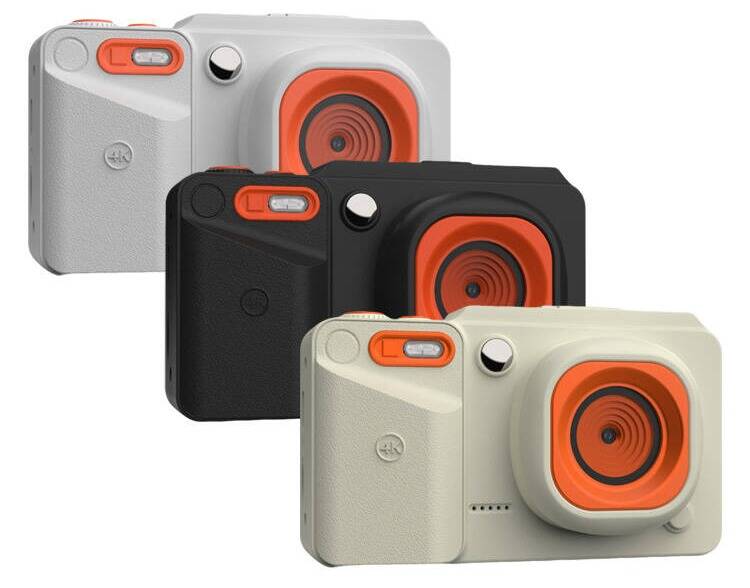
Obsolete “electronic waste”?
Around 2010, CCD cameras faded. They were supplanted by CMOS sensors. CMOS offers higher integration, lower cost, faster readout, and reduced power consumption. Each CMOS pixel has its own amplifier — enabling direct charge conversion. This advanced continuous shooting, video, and battery life.
In April 2015, Sony announced it would cease CCD production by March 2017. This marked the end of an era. By modern standards, CCDs were indeed “electronic waste” — low resolution, noisy in low light, with narrow dynamic range.
The Retro Trend Rises
Yet unexpectedly, a retro trend quietly emerged. Global social media discussions on CCD now garner billions of views. Second‑hand units once unsellable now trade for hundreds — even thousands. This craze spans China, Japan, Korea, Europe, and America.
This resurgence is no accident. For youth seeking individuality, CCD offers a distinct visual experience. Lower pixel counts create natural “skin‑smoothing” and “soft‑light” effects. Less‑than‑sharp imaging conveys a dreamy, hazy texture. Terms like “cool‑toned complexion” and “vintage atmosphere” now accompany CCD — transforming technical flaws into aesthetic hallmarks.
Internet celebrities fuel this trend. When idols share vintage photos, fans rush to buy identical models. From Tokyo to Los Angeles, Seoul to London, young people scour second‑hand shops and online platforms for these “outdated” devices.
The Secret of “Atmospheric Quality”
Technically, CCD has a distinctive imaging style. Without integrated amplification around each pixel, its photosensitive area is larger — offering a higher aperture ratio. In well‑lit conditions, it captures more light, producing pure, luminous photographs.
More importantly, CCD’s signal output ensures greater consistency. All pixels are processed through a single amplifier. This reduces noise and enhances uniformity. In contrast, CMOS amplifies each pixel independently. While fast and highly integrated, millions of amplifiers introduce inconsistencies and fixed noise.
Naturally, CCD has drawbacks. Low‑light sensitivity is limited. Noise is easily introduced. Dynamic range is narrow. Yet these very “flaws” cultivate its distinctive “atmospheric quality” — imperfect, therefore authentic; less sharp, therefore gentle.
Beyond the Camera
For many young people, CCD cameras transcend mere equipment. They become fashion accessories — adorned with stickers, chains, or slung over backpacks. They also carry nostalgia. Most enthusiasts are post‑95s or post‑00s, who remember these cameras from childhood.
Marketing experts suggest this retro resurgence stems from a yearning for “warmth” in the digital age. High resolution and AI enhance clarity — but sacrifice the artisanal warmth CCD reintroduces. Photography and sharing have become social rituals. Sharing expresses self‑awareness and strengthens group identity.
Globally, this pursuit of “analogue authenticity” is emerging as a cultural phenomenon. Following vinyl records, film cameras, and retro gaming, CCD now represents Generation Z embracing “old technology.” It symbolises resistance to hyper‑digitalised living — a yearning for tangible authenticity.

Conclusion
The CCD resurgence presents a fascinating case where technology and aesthetics intertwine. Technologically, it is obsolete. Aesthetically, its “imperfect authenticity” fills a void left by an overly polished digital world. As one enthusiast remarked: “We are not short of sharp images, beauty algorithms, or stylised filters. Photography is not just technique — it is documentation and expression. What we need goes beyond mere clarity.”
In this sense, CCD’s value lies not in image sharpness. It lies in how each captured moment carries the warmth of its era — and the photographer’s authentic perception of life. Perhaps this is precisely why CCD has unexpectedly returned, resonating deeply with young people worldwide.
Click to purchase.