An event organizer may have ordered the right cameras, but those cameras can still spend weeks waiting in cartons before anyone uses one. That time matters. Good single use camera storage helps protect the film from avoidable exposure and ensures the correct order reaches the correct event.
This becomes important when cameras arrive weeks or months before a wedding, conference, brand activation or distributor program. Several cartons may look interchangeable while actually belonging to different order references, artwork versions, packaging arrangements or receipt dates. Once those batches are mixed without records, even a small discrepancy becomes difficult to investigate.
The questions are connected: how long will the cameras be held, which delivery belongs to which event, and what happens if a problem is discovered before setup? Receipt records, storage conditions, batch rotation and pre-event checks all help answer them. Any shelf-life or environmental limit, however, needs to come from the selected product's documentation rather than a rule borrowed from another film product.
Keep cameras in their intended protective packaging in a stable location away from avoidable heat, moisture and direct sunlight. Make it easy to tell which delivery belongs to which event, and check the actual product's date guidance before planning a long holding period. If stock has been stored for some time, leave room for a representative check before the venue is being set up.
Why Event Timing Matters Before a Camera Is Used
It is tempting to move newly delivered cartons straight into general stock, particularly when the event still seems far away. But once the cartons are separated from their order details, the next person handling them may not know which project they were meant for.
Consider a team holding cameras for a corporate activation and a wedding at the same time. The cartons may be similar, but the projects can have different quantities, artwork or packaging. If the stock is merged because it fits on the same shelf, the storage room has already lost information that may be needed during staging.
Time changes the risk. Cameras arriving just before an event may move directly into staging, while an order held much earlier can be relocated, mixed with other stock or overlooked. The longer the hold, the more useful a clear record of its location and event assignment becomes.
When the camera specification is still open, the available single use camera options are worth reviewing before cartons are reserved for a particular event. Otherwise, a storage team can end up tracking the wrong configuration perfectly.
When Similar Cartons Belong to Different Events
Imagine someone asking which cartons belong to the next event just as the team starts packing. The answer should not require searching through old messages. A simple record needs to show what arrived, when it arrived, where it is and which event has been assigned the stock.
A supplier's batch or lot code can make that job easier, but not every delivery will arrive with an identifiable code. When it does not, an internal receiving reference can distinguish one shipment from another without pretending to be a manufacturer batch number.
Why the event date belongs in the inventory record
The event date creates an operational priority, but it does not automatically decide which carton should be released. An earlier event may need attention first while still requiring a different camera configuration or customized cover from another batch already in storage.
These dates tell different stories. The receipt date shows when stock entered the warehouse, the event date explains when it is needed, and the batch reference makes it possible to trace a concern to a particular delivery.
What Heat and Humidity Mean for Stored Cameras
A single temperature or humidity figure can sound reassuring when cameras are going to sit in storage for weeks. Yet a number borrowed from another film product can create more confidence than it deserves. The right guidance depends on the finished camera, its film and its packaging.
Time spent in a sunny vehicle or warm loading area is not the same as time spent in a protected storeroom. That is why avoidable heat exposure matters even when a product-specific maximum temperature has not yet been confirmed.
Keep the environment stable and predictable
A stable storage room is more dependable than a convenient corner near a loading door, especially if that corner receives direct sun, localized heat or frequent changes in conditions.
Keeping protective packaging and visible batch labels intact also makes it easier to recognize untouched event inventory when the time comes to stage it.
Do not turn temporary staging areas into storage
Vehicles, loading docks, damp corners and sun-facing spaces may be convenient during a handoff but should not become uncontrolled long-term holding locations.
If an event requires storage in less-than-ideal conditions, the supplier can give more relevant guidance when those actual conditions are described rather than replaced with an assumed safe range.
Moisture brings a different set of concerns. A damp floor, a leaking pipe or condensation on packaging may go unnoticed until cartons are moved. Keeping stock away from those situations is more useful than treating an unverified humidity figure as a guarantee.
It can be tempting to open cartons repeatedly just to make sure the order is still in good condition. But repeated handling makes it harder to distinguish untouched cameras from inspected or sampled units. Where packaging is intended to stay closed until use, it is better left intact unless supplier instructions or a planned check call for opening it.
For general photographic-film background, Kodak's Storage and Handling of Unprocessed Film discusses heat, humidity, long-term storage and condensation. Those recommendations should not be copied automatically as the specification for a different finished camera; the applicable instructions should still be confirmed for the selected product and batch.
A finished camera is a complete product rather than loose film stock. Refrigeration, freezing or another unusual storage method should only be introduced where instructions for the actual camera support it. Moving products between substantially different environments can also create condensation-management questions.
Rotate Camera Batches Without Losing Event Traceability
FIFO—first in, first out—is a useful starting point for rotating disposable camera batches, but it should not be applied blindly. The oldest carton in storage is not necessarily the right one for the next event.
A better decision starts with one question: which batches are eligible for this event? Only after the product configuration, customization and allocation match should receipt date determine which eligible batch moves first.
How to rotate camera batches for events
Match the camera configuration, event allocation, customization and packaging before comparing receipt dates.
If the batch carries relevant shelf-life or date guidance, include it in the release decision instead of relying on warehouse receipt date alone.
Where batches are genuinely interchangeable and no other confirmed instruction changes priority, release the earlier eligible receipt first.
If a batch is skipped because of packaging condition, customization, quarantine status or another reason, record that decision rather than silently moving to newer inventory.
If a performance concern comes up later, it may involve one delivery rather than every camera ordered for the event. Preserving receipt identities makes it possible to investigate that difference without treating all the stock as one indistinguishable batch.
If the event is a wedding and film amount, flash requirements or camera quantity are still being decided, settle those questions before final batch allocation. KMSUPERB's guide to choosing disposable cameras for weddings covers those upstream decisions separately.
Why the Camera Model Matters to the Storage Plan
The storage plan becomes much clearer once the actual camera has been chosen. Film amount, artwork and packaging are not minor details when cartons for different events are sitting beside one another.
For a project still comparing models, KMSUPERB's Silver Disposable Camera is one option to consider against the event brief before quantities are committed to storage.
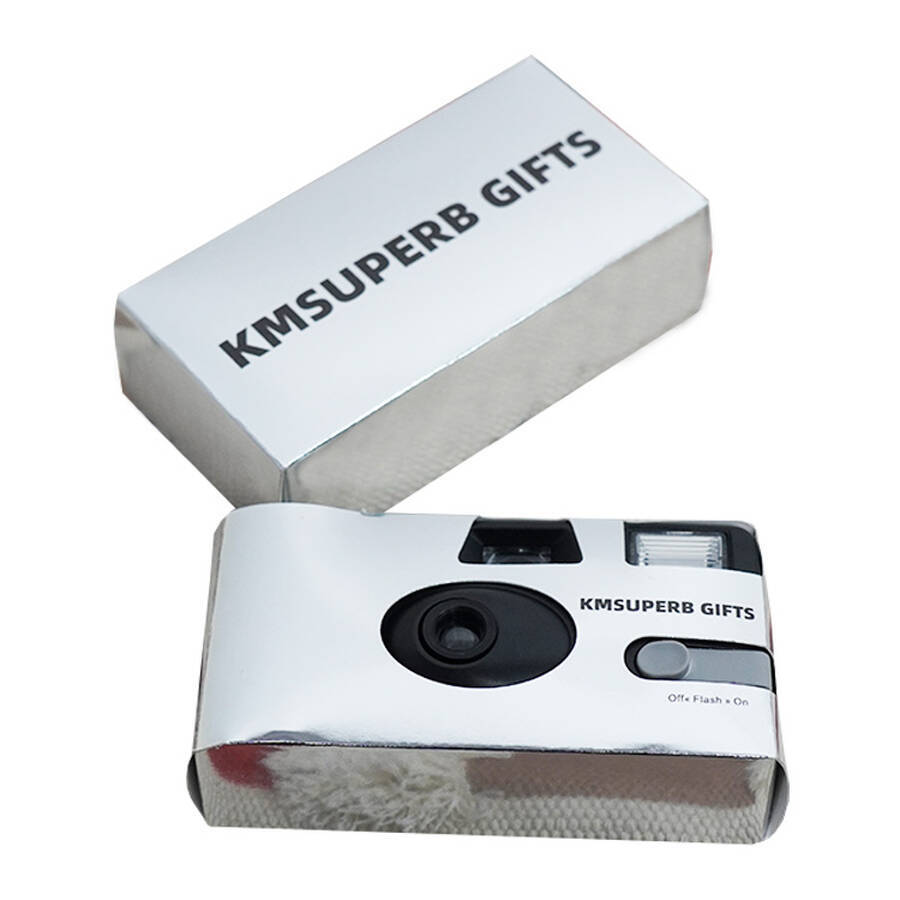
For a multi-model event program, compare the available camera collection before assigning final quantities to individual batches. Storage records are easier to manage once the product and event allocation are fixed.
Why Checking Cameras on Setup Day May Be Too Late
During venue setup, there may be very little time left to work out why a camera is not behaving as expected. A check made earlier gives the team more options: it can identify the relevant receipt, hold questionable stock and seek supplier guidance before guests arrive.
A camera used as a sample is no longer untouched event stock, even if it is still physically on the shelf. Linking that camera to its original receipt also helps keep a problem in one delivery from becoming a question about every carton.
What should a function check cover?
A designated sample may reveal obvious issues with the casing, film advance, shutter or flash, depending on the model and its operating instructions. It cannot, by itself, show how the developed photographs will look. If image consistency is especially important, ask the supplier whether exposing and developing a sample in advance makes sense, with enough time allowed for processing.
A sample that works as expected is reassuring, but it does not prove that every separate receipt has the same condition or storage history. The other deliveries still need to remain identifiable.
Why a Full Stock Count Can Still Leave an Event Short
A physical warehouse count can be correct while still overstating the quantity available for the event. Cameras may remain physically present even though they have already been sampled, quarantined, reassigned or deliberately held as reserve stock.
The number on the shelf is not necessarily the number an organizer can hand out. Only cameras approved and allocated for that event belong in its release count.
Confirmed cameras assigned to the event and included in the venue release count.
Cameras held for a defined shortage or replacement situation rather than distributed automatically.
Samples, stock on hold, cameras assigned elsewhere and units already consumed during testing.
There is no universal backup percentage
A fixed reserve percentage is easy to put in a plan, but it can miss how an event actually works. The more useful question is how quickly an extra camera could reach someone who needs one, and what happens if the supply runs short.
A single-venue dinner with centralized storage may allow reserve cameras to stay in one controlled location. A conference spread across several rooms may require smaller reserve allocations near different activity zones. At a destination event, replacement stock may be difficult to obtain quickly, making the reserve decision more important before dispatch.
One venue: central backup may work when staff can reach it quickly.
Several rooms or zones: decide whether reserve cameras should be divided before load-out.
Destination event: consider what happens if a shortage is discovered after arrival.
Multiple simultaneous events: label reserve stock clearly so one project does not consume another project's allocation.
Seven Questions to Answer Before Cameras Leave Storage
By the time cameras are being packed for the venue, the team should not have to reconstruct months of inventory movements. These seven questions focus on the details most likely to change whether the right stock leaves storage.
Receipt date, batch or internal reference and physical storage location should agree.
Check for event-date changes, partial releases or stock reassigned since receiving.
Review cameras that spent unexpected time in hot, damp or uncontrolled locations and isolate concerns rather than mixing them silently back into normal inventory.
Confirm product configuration and event ownership before receipt date determines the release sequence.
A questionable result should still leave time for investigation or supplier confirmation.
The release number should represent cameras that can actually be deployed.
Define where reserve cameras will be held and who can release them if they are needed.
How Long Can Disposable Cameras Stay in Storage?
Disposable cameras contain photographic film, and film does not remain unchanged indefinitely. That makes the date information for the actual product more useful than a universal claim about how many months a camera can sit on a shelf. Any guidance on the packaging or in supplier documents should remain connected to the relevant batch.
If the packaging and supplier documents do not clarify the holding period, the event date and expected storage conditions give the supplier the context needed to advise on that particular camera and order.
How cameras have been stored matters as well. General film-handling guidance explains why heat and moisture deserve attention, but it cannot be treated as a verified storage specification for a different finished camera.
- Cameras will be held for an extended period before the event.
- The available storage room experiences unusual heat, humidity or seasonal variation.
- Packaging contains a date or batch code the team cannot interpret.
- Different camera configurations or receipts may be combined for one project.
- There is uncertainty about sealed storage, sampling or another special handling requirement.
What to Discuss With the Supplier Before Ordering
A conversation with the supplier is more useful when it starts with the real event rather than a generic request for camera specifications. The date, quantity and expected delivery window show what is being planned; the holding period and storage conditions explain what still needs to be resolved.
There is little value in guessing a shelf-life figure just to complete an inquiry. Known project details can be stated plainly, with the remaining storage questions left for product-specific confirmation.
Event date, required quantity, destination, expected receipt timing and whether the stock will support one event or several allocations.
Expected holding period, unusual heat or humidity, storage-room limitations and whether inventory will move between locations.
Shelf-life guidance, date coding, storage instructions, packaging requirements, sample procedure or another batch-specific issue.
Questions Event Teams Often Still Have Before Release
A few questions tend to come up again when cameras have been stored for some time, especially when several deliveries or events share the same space.
How should single use cameras be stored before an event?
Keep each receipt identifiable, maintain appropriate protective packaging and use a stable storage location protected from avoidable heat, moisture, direct sunlight and uncontrolled handling. Product-specific supplier instructions should take priority where they are provided.
How should camera batches be rotated?
Confirm that the batches are eligible for the same event and product configuration first. Then review supplier-provided date information and use FIFO among genuinely interchangeable stock. Record any batch that is deliberately skipped or held.
When should a pre-event function check be scheduled?
Schedule it with enough lead time to investigate a questionable result before the event. Keep the sample linked to the batch it represents and remove consumed samples from the usable inventory count.
Should FIFO always override the event allocation?
No. Event ownership, camera configuration, customization, packaging and supplier-provided date guidance should be checked first. FIFO determines rotation only among stock that can genuinely substitute for one another.
What storage details need supplier confirmation?
Confirm any product-specific shelf-life or date guidance, storage and handling instructions, requirements for longer holding periods, and precautions needed when the actual storage environment involves unusual heat, humidity or another atypical condition.
Prepare the Information That Changes the Storage Decision
Before discussing options, it helps to know the event date, the number of cameras needed, when the order is expected to arrive and where it will be held. If the storage conditions are unusual, describing them gives the supplier something concrete to respond to.
Make Storage Part of the Camera Order
A camera order needs to work for the event itself and for the time leading up to it. Single use camera storage is part of that decision, not a separate set of rules to think about only after the cartons arrive.
When contacting KMSUPERB, share the event details and any concerns about holding time, packaging, batch identification or unusual storage conditions. That context helps keep the discussion focused on the cameras you actually plan to use.