When buying spray roses in volume, a label such as “premium grade” does not tell a florist, wholesaler or event buyer enough. What matters is whether the stems can actually be used efficiently after arrival: how many useful flowers each branch carries, how much working stem remains after trimming, and whether the flowers will reach the right opening stage at the right time.
Good spray rose grading turns those expectations into specifications that can be confirmed before packing and checked again at receiving. This guide focuses on bud or usable flower count, stem length and bloom stage because they strongly affect wholesale usability—not because they are the only characteristics that determine rose quality.
Do not choose spray roses by the highest number on a specification sheet. Choose the combination that fits what happens after delivery.
What Spray Rose Grading Should Actually Tell a Buyer
A grading specification is useful only when it helps predict what the buyer can do with the flowers after the carton is opened. A bouquet production team needs repeatable branches that require little sorting. A wedding florist may care more about working length and how far the flowers will open before an event. A wholesaler dividing cartons among several customers may put more weight on consistency between bunches.
This is why terms such as “A grade,” “premium” or “export quality” should not stand alone. A more useful order defines characteristics that can be checked: stem length, flower count, maturity, branch condition and acceptable variation.
Bud count, stem length and bloom stage are the focus of this guide, but they are not a complete definition of rose quality. Stem strength and straightness, flower and foliage condition, physical damage and overall uniformity can also affect whether a stem is commercially usable.
The receiver still does not know what length, maturity, flower count or variation was expected.
State the usable length, flower-count expectation, arrival stage and characteristics that matter to the job.
Receiving can compare a sample with what was actually agreed instead of redefining quality after arrival.
Published industry references show why a buyer should not reduce spray rose grading to one number. Flowers Canada Growers' published spray-rose reference uses factors including minimum stem length, stem strength, curvature and minimum flowers per stem, while noting that flower count can vary by variety.
The UC Davis Postharvest Research and Extension Center likewise describes rose grading in terms of stem length together with maturity, straightness, stem caliper and flower and foliage quality. These references are useful context rather than a universal contract standard; the actual order should still define the specification being used. Flowers Canada grading references and UC Davis rose guidance.
For the broader principles that apply across several cut-flower types, see how stem length, bloom stage and grade affect fresh flower purchasing .
Bud Count: Count the Flowers That Will Actually Contribute
Buyers often use “bud count” as shorthand when discussing spray roses, but product and grading specifications may instead describe flowers or blooms per stem. That distinction matters because every visible bud does not necessarily contribute the same commercial value.
A developed bloom positioned well on the branch is different from a very small bud that may remain insignificant in the finished arrangement. If count affects bouquet costing, resale value or production planning, agree on what qualifies as a commercially useful bloom rather than relying only on the number of visible buds.
A balanced branch can be easier to design with than one carrying the same number of flowers crowded in one area. Flower placement affects how much visual fullness one stem creates and how easily it can be positioned in a bouquet.
Small closed buds can be normal on spray roses, but they should not automatically be treated as equal to developed flowers when the buyer is calculating usable floral yield.
Flower count can differ between spray rose varieties. A requirement that works for one variety should not automatically be copied to another without checking how that variety naturally flowers.
A higher count is not automatically a higher commercial grade. Stem strength, branch balance, flower development and overall condition still determine whether those additional flowering points are useful.
Instead of requesting only “five buds per stem,” define a target such as “3–5 commercially useful blooms per stem, with balanced branching” and confirm how very small undeveloped buds will be treated in the count. The appropriate number still depends on the variety being ordered.
Stem Length: Buy the Length the Design Can Actually Use
Longer stems can provide more design flexibility, but the longest available stem is not automatically the most economical choice. What matters is how much usable length remains after receiving, re-cutting and arranging.
A florist creating tall installations may need significant working length because every trim reduces the available height. A team producing compact table arrangements may cut away much of that same stem. In that case, paying for extra length may add little practical value.
With spray roses, branch structure matters alongside length
Two stems can measure the same overall length yet behave differently in an arrangement if their flowering branches sit at different heights or spread differently. For designs where the spray itself creates volume, look at whether the branching pattern gives usable flowers where the florist needs them—not only at the centimeter measurement.
When confirming an order, make sure both sides understand whether the stated length is a minimum, a target range or one of several selectable ranges. The same measurement method should then be used during receiving.
Bloom Stage: Work Backward From the Day the Roses Need to Look Right
Bloom stage is not simply an aesthetic choice. It is a scheduling decision. Roses arriving tighter have more development ahead of them, while flowers arriving further open may provide faster visual impact but less time before they become too mature for the intended use.
The right specification depends on the time between receiving and display. Flowers arriving several days before a wedding may need a different opening stage from roses intended for near-immediate retail or event use.
One spray can carry flowers at more than one opening stage
Because several flowers share one spray, the branch does not necessarily present every bloom at exactly the same stage. One flower may be more developed while smaller side buds remain tighter. For wholesale orders, it is therefore more practical to describe the overall arrival presentation and define which differences are acceptable than to expect every flower on every branch to look identical.
Terms such as “tight,” “semi-open” or a numbered maturity stage can still be interpreted differently. When timing is important, combine the term with something observable—for example, whether the main blooms have started opening and whether smaller buds are expected to remain closed at arrival.
A reference photograph can help clarify the target for an event or repeated order, but it should support the written specification rather than replace it.
Do not select the most open-looking stems simply because they appear more impressive on the day of purchase. For time-sensitive work, the important question is how the flowers are expected to look when they are actually used.
Which Spray Rose Specification Should You Prioritize?
There is no single spray rose grade that is best for every buyer. Start with the part of the job that will create the most waste, extra labor or design difficulty if it is wrong, then make that factor the priority.
When the same bouquet must be produced repeatedly, predictable branching and a consistent number of useful flowers can reduce sorting and substitution. A few exceptional stems matter less than reliable performance across the batch.
Give the supplier both the delivery date and event date. The most useful stem is not necessarily the most open one; it is the one that has enough time to condition and reach the desired appearance before installation.
Leave enough allowance for trimming and angle adjustment. A shorter stem can become a costly compromise if designers lose the height or flexibility needed for the installation.
If one shipment will be divided among multiple customers, a predictable range often matters more than maximizing one metric. Similar lengths, flower counts and maturity levels make stock easier to divide without creating visibly different customer lots.
Write a Spray Rose Specification That the Receiving Team Can Check
A simple test reveals whether a purchase specification is clear enough: could a colleague who did not place the order open the shipment and determine whether it generally matches what was requested?
If that person still needs to guess what “premium,” “long” or “not too open” means, the order needs more definition.
Set the range according to what the difference actually affects
Fresh flowers are agricultural products, so useful grading is normally about an acceptable commercial range rather than making every stem identical. Tighten the characteristics that affect the finished job and allow reasonable variation where it does not change the result.
That approach is more useful than demanding maximum length, maximum flower count and maximum uniformity at the same time without considering how the roses will actually be used.
Check the Three Grading Points Before the Flowers Are Mixed or Trimmed
Receiving does not need to repeat an entire general flower-quality inspection here. For this grading question, sample multiple bunches and compare the shipment with the three specifications that were agreed before shipping.
If the issue involves dehydration, temperature exposure or shipment handling rather than grading alone, use the separate fresh cut flower cold chain guide for the broader receiving and logistics workflow.
When a 60–70 cm, 3–5 Bloom Spray Rose Fits the Requirement
Once the grading criteria are clear, the product page becomes useful because the buyer can judge the specification against a real flower rather than a generic grade label.
KMSUPERB's current Sophy's Rose listing specifies 60–70 cm stems and 3–5 blooms per stem. The product page also describes a natural color progression as the flowers open, so arrival stage can affect both the degree of opening and the shade visible when the flowers are used.
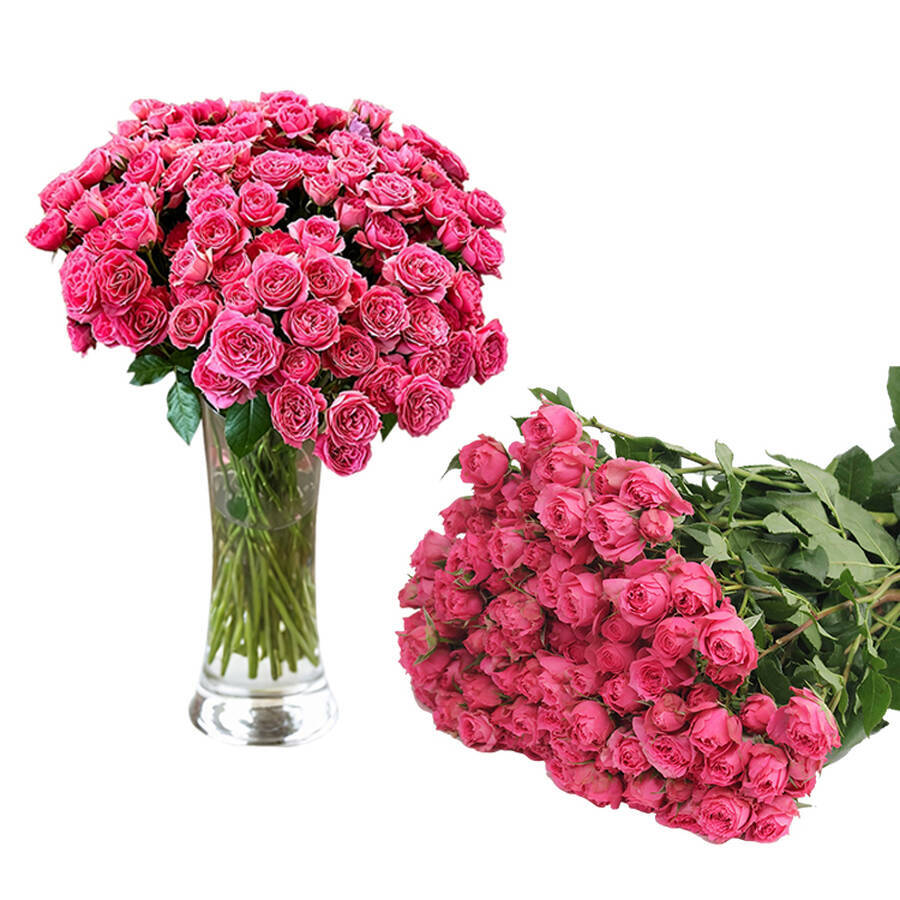
You can also browse the current Rose category or, if the flower type itself is still open, explore the Fresh Cut Flower range .
Send the Information That Can Actually Change the Order
A useful inquiry does not need dozens of specifications. It needs enough context for the supplier to understand what is fixed, what affects the finished result and what still needs to be confirmed.
Required quantity, destination, arrival date, final use or event date and preferred variety.
Working stem length, usable flower count, opening stage, branch appearance or another characteristic that affects production or resale.
Current seasonal availability, achievable grading range, pricing, packing and the estimated shipment schedule for the destination.
Continue the Wholesale Flower Buying Process
Questions Buyers May Still Have About Spray Rose Grading
These are the details most worth clarifying when the specification is being finalized.
Is a spray rose with more buds automatically a higher grade?
No. The value of the stem also depends on how developed the flowers are, where they sit on the branch and whether the stem can support them. A balanced stem with fewer commercially useful flowers can be more practical than a higher count containing several weak buds.
Should very small closed buds count toward a 3–5 bloom specification?
Do not leave that point to assumption. If flower count affects costing or bouquet production, confirm whether the stated range means all visible buds or commercially useful blooms. For Sophy's Rose specifically, the current product page notes that some small buds can arrive closed.
Does every spray rose variety need the same number of flowers per stem?
No. Flower count can vary by variety, which is one reason a buyer should confirm the requirement against the actual variety being purchased rather than applying one universal number to every spray rose.
How should bloom stage be judged when flowers on the same spray are not equally open?
Define the desired overall arrival presentation rather than requiring every flower to be identical. The specification can describe the condition of the main blooms and clarify whether smaller side buds are expected to remain tighter at arrival.
What stem length should I order for spray roses?
Choose enough working length for the finished design after normal re-cutting and processing. Compact bouquets may not need the same length as tall centerpieces or installations. Branch structure should also be considered because two equally long spray rose stems can distribute their flowers differently.
Why can Sophy's Rose look different in color as it opens?
The current product listing describes the variety as naturally changing from peach-pink toward deeper rose-red and rose-purple tones as the flowers develop. If a project requires a very specific shade at a fixed date, confirm the expected arrival and use-stage appearance before placing the order.
Could Your Receiving Team Tell Whether the Shipment Matches the Requirement?
If the team knows what length to measure, which flowers count, what overall opening stage to expect and which natural differences are acceptable, the grading specification is doing its job. If they still need to interpret what “premium quality” was supposed to mean, clarify the order before shipment.
Send the Grade You Need—or the Project Details Needed to Define It
If you already know the specification, send the required quantity, preferred variety, stem-length range, target usable flowers per stem and desired arrival stage.
If you are still deciding, send the destination, required arrival date, event or use date and the part of the design that matters most. That gives the supplier a clearer basis for discussing the appropriate specification instead of relying on a generic grade label.
Fresh flowers are seasonal, so current availability, pricing and the estimated shipment schedule should also be confirmed before a bulk order is finalized.