A bottle can give an entire gifting program a clear center. It supports daily use, visible branding, and practical pairing without turning the package into a crowded assortment. However, an employee welcome package and an external relationship program do not serve the same purpose. One supports belonging and first-day readiness, while the other supports recognition, meetings, events, and long-term professional relationships.
Planning should begin with the occasion, recipient group, and delivery method. A carefully structured custom water bottle gift set can then connect the main product, supporting items, packaging, printed message, recipient data, and arrival schedule into one practical system.
Why the Bottle Should Lead the Set
A useful anchor item gives every supporting product a reason to be included. A bottle can move from a desk to a meeting room, commute, training session, conference, or home workspace. The set therefore remains useful after the first opening moment, while the bottle's shape creates a natural visual center inside a presentation box.
Repeated use creates steady brand visibility. The bottle may appear beside a laptop, travel in a work bag, or remain on a meeting table. That presence can support recognition without repeating a large logo on every item. The notebook, pen, and card can add context without competing with the main product.
Useful after the event
The central item should remain relevant during normal routines. That allows the program to continue creating value after onboarding, recognition, or event delivery.
A clear visual center
The bottle has more visual weight than a card or pen. Smaller components can support the layout instead of fighting for attention.
Visible without looking forced
A balanced logo can stay visible during repeated use. Restrained decoration usually looks more professional than artwork covering every available surface.
Size and shape affect the whole project
Bottle dimensions affect box footprint, insert depth, shipping weight, and the space available for supporting items. A narrow format may leave room for a notebook and pen beside it. A wider profile may require a deeper insert or a simpler two-item combination. The physical product should guide the package instead of being forced into a box chosen earlier.
The lid, handle, and overall profile also matter. A layout may look balanced in a flat mockup but feel crowded after production. Product dimensions, artwork areas, and package structure should be reviewed together. Exact choices depend on the selected model, quantity, customization, packaging, and destination.
More items do not always create more value
A bottle-led package becomes weaker when every available space receives another object. An unrelated novelty item may increase the item count while reducing clarity. Each addition should support one defined moment, such as a first working day, training session, meeting, event handoff, or recognition program.
This rule also protects the budget. In many cases, a stronger central product, cleaner decoration, and better packaging create a more complete result than a crowded box. The final set should feel designed around a purpose rather than assembled from several unrelated categories.
Employee Welcome Kits and Relationship Programs Need Different Logic
The same bottle can support two different program types, but the surrounding choices should change. An employee package usually focuses on belonging, first-day readiness, routine, and repeatable distribution. An external relationship package may support a meeting, annual recognition moment, regional campaign, conference, or professional milestone. The message and delivery plan should not simply be copied from one format to the other.
| Planning Area | Employee Welcome Kit | External Relationship Program |
|---|---|---|
| Main goal | Belonging, orientation, and daily readiness | Recognition, meetings, events, or relationship care |
| Tone | Warm, inclusive, and team focused | Professional, restrained, and occasion focused |
| Timing | Before or on the first working day | Before a meeting, at an event, or near a milestone |
| Personal layer | Welcome note, team message, or start date | Meeting context, milestone, or professional sign-off |
| Distribution | Office batches, new-starter waves, or remote parcels | Named lists, event handoff, or multi-location dispatch |
Build around the first working experience
A welcome package should reduce friction and create a clear sense of arrival. Ideally, it appears before orientation or sits ready at the workstation. That timing makes the set part of onboarding rather than a delayed reward.
A notebook and pen can support immediate work tasks, while a short card adds warmth without placing long program messages on products the employee may use for months or years.
Build around a defined professional moment
The package should connect with a meeting, event, recognition moment, or account milestone. The card, box, and delivery date all need a clear reason.
Branding often works better with greater restraint. A smaller drinkware mark and concise message can preserve professional use after the occasion.
First-day and remote onboarding
Timing changes the meaning of an employee package. When it arrives before the start date, the set becomes part of the first working experience. When it arrives several days later, it can feel disconnected from onboarding. The required arrival date should align with orientation, office access, or the first team meeting.
Remote distribution needs stronger data control. Each parcel may require a verified name, address, phone detail, and delivery window. The presentation packaging must also survive individual courier handling rather than bulk office transport. A controlled recipient file and a clear process for address changes can prevent avoidable reshipments.
Consistency without unnecessary uniformity
A welcome program should feel consistent across teams and offices. Still, consistency does not require every regional detail to remain identical. The core bottle, visual system, and main message can stay aligned while language or printed inserts vary by location. The program keeps one identity without ignoring practical regional needs.
For external programs, the relationship stage should guide the presentation. A first meeting may suit a compact set with subtle decoration. An annual recognition program may support a more developed box and a stronger printed message. The occasion should shape the tone instead of relying on one generic design.
Best suited to these program types
- New-starter onboarding
- Remote welcome delivery
- Training and orientation
- Multi-office team launches
- Partner meetings
- Conference welcome packages
- Regional event delivery
- Professional appreciation programs
Choose Supporting Products by the Program Use
A pairing framework turns product selection into a practical decision. Instead of asking how many items can fit inside the box, begin with the work or relationship moment the package must support. The answer may be orientation, desk setup, training, meeting preparation, event attendance, recognition, or remote delivery. From there, each supporting item receives a clear role.
Five checks for every added item
Bottle, notebook, and pen
This three-item combination works because every piece supports a familiar workday action. The bottle remains visible throughout the day, the notebook captures information, and the pen makes the set ready to use immediately. Their shapes can also create a balanced box layout without requiring many components.
Branding should not appear at equal size on all three surfaces. A stronger bottle mark, smaller notebook mark, and lightly decorated pen often create better balance. Artwork should reflect each item's role and available decoration area. Exact methods depend on the confirmed product surfaces and artwork.
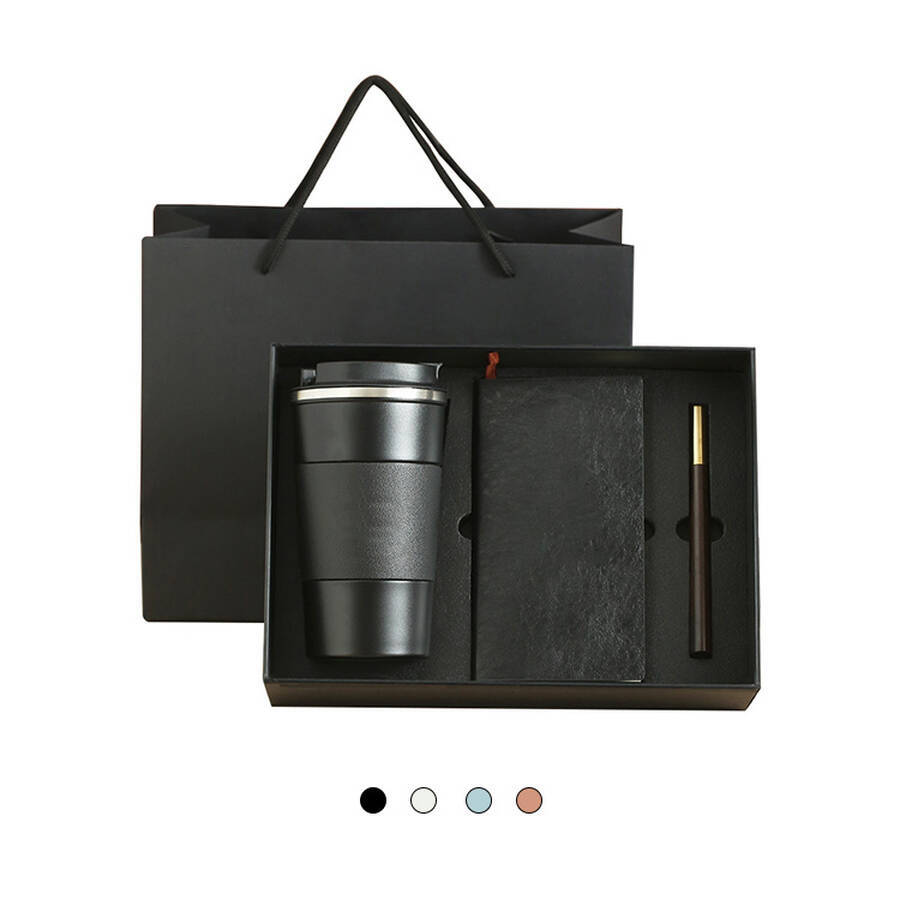
A bottle-led set for onboarding and daily work
This coordinated gift-set direction combines stainless steel drinkware with a notebook and pen, keeping the bottle as the main reusable item while the supporting pieces add immediate workday value.
This format works particularly well for onboarding, training, employee recognition, conference, and professional workday programs where the recipient should be able to use the products immediately.
Use this direction when you want one clear anchor product rather than a box filled with unrelated promotional items.
View the Water Bottle Gift SetBottle and notebook
A two-item package can feel more considered because the layout has room to breathe. The notebook gives the set a clear work context, while the bottle extends use beyond the event or first week. Fewer products can also simplify artwork, packing, and inventory control.
Bottle and card
A minimal format works when the bottle carries enough functional and visual value by itself. The card explains the occasion, while the package protects the product and supports the reveal. This approach can suit remote delivery, compact event programs, or projects with fewer product approvals.
The card should still feel intentional. A concise message, recipient name, team note, event reference, or date can make the package specific without changing the reusable product artwork. The same bottle direction can then support several program waves.
Use controlled package tiers
Some projects need more than one presentation level. A core set may include a bottle, notebook, and card, while a compact mailing version uses a bottle and card. An enhanced relationship package may add a pen or a stronger presentation box. Even so, all versions should share one visual system and one central product direction.
Tier names should remain operational, such as core, compact, and enhanced. Each level should have a defined use, quantity, packaging method, and delivery route. This structure makes approval easier and reduces last-minute substitutions.
A thermos-led presentation set for professional gifting
When an external relationship program calls for a more presentation-led drinkware format, a stainless steel thermos or tumbler paired with a notebook and pen can be a logical alternative to a conventional bottle profile.
This direction is better suited to executive gifting, partner appreciation, employee recognition, and professional meeting programs where the complete presentation matters as much as portability.
For wider sourcing, the corporate gift sets collection provides additional combinations without changing the use-first planning method.
View the Thermos Gift Set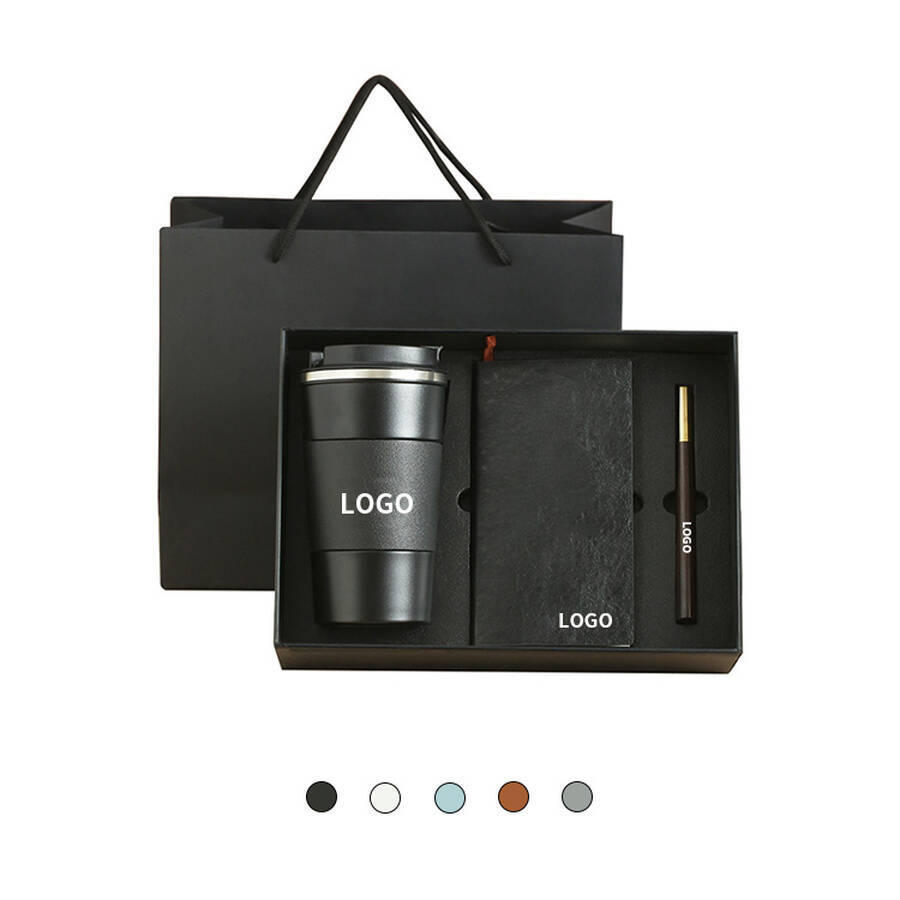
Build the Branding and Packaging Hierarchy Around the Program
A clear hierarchy prevents visual noise. The bottle should usually carry the main reusable brand element, while the box establishes presentation and the card explains the occasion. Recipient information belongs on a controlled printed layer rather than every product. Each surface should have one primary job.
Bottle: the long-term brand surface
Keep the mark readable, balanced, and suitable for repeated use. Long campaign wording usually belongs on the card.
Box: the presentation layer
Use the box to establish the visual tone, opening sequence, and occasion without repeating every product detail.
Card: the message and occasion
Place welcome wording, milestone details, event context, names, or signatures on the flexible printed element.
Outer carton: the logistics layer
Use carton marks and labels for quantities, destinations, receiving contacts, and handling information.
Keep permanent artwork simple
The bottle may remain visible for months or years, while the outer carton disappears after delivery. Permanent surfaces therefore need simpler messages than temporary surfaces. A logo or short approved line can work well when the confirmed decoration area allows. Longer program copy usually creates a better reading experience on the card.
Placement should consider curves, seams, lids, handles, and common viewing angles. Final artwork should follow confirmed product information rather than a generic concept image. Color may also appear differently on bottle finishes, printed cards, notebook covers, and box materials. Approval should focus on a coordinated visual family instead of assuming perfect color identity across every surface.
Design the opening sequence
The box introduces the program before the product appears. A clear sequence may show the message card first, followed by the bottle and supporting products in a balanced arrangement. No item should hide another or require complicated removal. A simple sequence improves both presentation and packing consistency.
One standard box may sometimes serve several regions while the card or removable label changes by language or recipient group. This approach can reduce unnecessary packaging versions. Feasibility still depends on quantity, printing method, product dimensions, and delivery structure.
Coordinate without duplicating
Coordination does not mean placing the same large logo and slogan on the bottle, notebook, pen, box, card, and carton. Instead, the bottle can carry the durable mark, the box can carry the presentation theme, and the card can carry the occasion-specific message. This hierarchy keeps the package branded without making it feel overly promotional.
For broader brand projects, KMSUPERB's promotional products range can support coordinated sourcing across categories. Even so, the package should remain focused on the bottle and the selected use case.
Plan Quantity and Delivery by Recipient Group
Quantity planning begins with recipient structure rather than one rounded total. An employee program may include confirmed starters, expected hires, reserve stock, office inventory, and remote shipments. An external program may include a named list, event allocation, regional office stock, host sets, and contingency units. Each group should appear separately in the project brief.
This separation changes the quote and packing plan. Five hundred sets could mean one office delivery, five regional cartons, or five hundred individual parcels. Those routes require different labels, data files, packaging protection, and delivery work. The total quantity alone does not provide enough information.
Confirmed sets
Units approved for the main production and packing schedule.
Reserve units
Replacement, late-entry, event, or internal inventory requirements.
Delivery groups
Quantities divided by office, country, event, or parcel type.
Arrival dates
The required in-hand date for every destination or program wave.
Control recipient data
Named programs need accurate information. A controlled file can separate display name, shipping name, office, country, address, phone detail, package version, and required date. Incomplete records should remain on hold instead of receiving guessed labels. This rule protects presentation quality and reduces avoidable returns.
A batch sheet can also show confirmed, pending, packed, shipped, and delivered status. One person or team should own the final data approval. Without that control, several versions of the same list may circulate across departments and create duplicate or missing shipments.
Map offices, countries, and handoff points
Each office or venue should have a receiving contact, available hours, carton count, set count, and internal handoff plan. Multi-country delivery may also require separate timing or documentation. Exact requirements depend on the selected products, quantity, customization, packaging, and destination.
Office-level delivery may simplify distribution in some regions. One carton can arrive with individually identified sets inside, while the local team handles final handoff. Remote programs may require individual parcels and stronger protective packing. The delivery route should influence the package before artwork approval.
Work backward from the in-hand date
The arrival date should guide product confirmation, artwork preparation, packaging approval, recipient data, packing, and shipping. It should appear in the first inquiry rather than after product selection. Internal review time also matters because logo, copy, procurement, and address approval may involve several teams.
The in-hand date should remain separate from the event or start date. An office may need time to receive cartons, check quantities, and distribute sets. Likewise, an event team may need stock before setup begins. A realistic buffer protects the final handoff.
Avoid the most common combination mistakes
Every component should support one defined work, event, or relationship moment.
Internal welcome and external presentation need different messages and delivery logic.
One main bottle mark, one box treatment, and one message card usually create better balance.
Final placement should follow confirmed products, surfaces, and package dimensions.
Office delivery, event handoff, and courier parcels require different protection.
Names, addresses, package versions, and deadlines should be controlled before packing.
Prepare a Quote Brief for the Actual Program
A useful quote brief explains the program before listing products. The same bottle may need different supporting items, packaging, and delivery support across two projects. The first message should show the purpose, quantity structure, artwork direction, destination, and required arrival date.
Information to prepare for a quote
When the supporting product is not confirmed, the intended use is more valuable than an assumed specification. For example, “a notebook for first-week orientation” gives clearer direction than an unverified page count or cover material. Likewise, the package brief should describe the desired presentation level and distribution route rather than assuming a specific box structure.
For broader combination planning, the guide to corporate gift set ideas provides additional context. The stainless steel water bottle gift set guide can support bottle and packaging decisions when the project needs more product-specific detail.
Frequently Asked Questions
What items can be paired with a bottle in a welcome kit?
A notebook, pen, welcome card, and practical packing elements can create a focused workday combination. Every addition should support onboarding, training, desk setup, or another defined use. Final options depend on the selected products, quantity, customization, packaging, and destination.
How many items should be included in a water bottle welcome kit?
There is no useful fixed item count. Start with one strong bottle as the anchor, then add only the supporting products that solve a clear need. A bottle, notebook, pen, and message card can be enough for a workday program, while a bottle and card may be more appropriate for compact remote delivery. More items should be added only when they improve the intended use.
How should an employee package differ from an external relationship program?
An employee package usually supports belonging, first-day readiness, remote onboarding, and repeatable internal distribution. An external program may focus on meetings, events, recognition, milestones, or regional delivery. The card, branding level, package structure, and timing should reflect those different goals.
How can branding be coordinated across the bottle, box, and card?
The bottle can carry the main long-term brand element, while the box supports presentation and the card explains the occasion. Recipient details can remain on the card, label, or shipping layer. This hierarchy avoids repeating the same artwork everywhere.
What should be planned for remote recipients or multiple locations?
The program should confirm names, addresses, phone details, office rules, delivery countries, and required arrival dates. Packaging should protect the bottle during individual shipment, not only bulk transport. A controlled recipient file and phased dispatch plan can reduce errors.
What information is needed for a quotation?
The brief should include quantity, logo file, target use or event, preferred product combination, packaging direction, destination, and required arrival date. It should also explain whether delivery is bulk, office based, regional, or individual.
Three practical next steps
- Define the program type, target use, recipient structure, and required arrival date before selecting the final combination.
- Prepare the quantity, logo file, packaging direction, destination list, and variable recipient information in one controlled brief.
- Review product pairing, artwork hierarchy, package format, and delivery route as one connected system.
Plan a Bottle-Centered Welcome or Relationship Program
For a coordinated water bottle gift set, provide the quantity, logo file, target use or event, preferred combination, packaging needs, destination, and required arrival date. Final product, customization, packaging, and delivery options depend on the confirmed project scope.
Contact KMSUPERB for a Quote